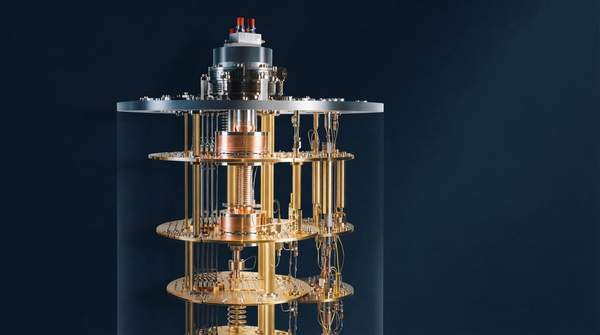
The MNISQ dataset, containing 4.95 million data points across 9 subdatasets, marks the first large-scale effort to bridge quantum and classical machine learning in the noisy intermediate-scale quantum (NISQ) era. This extensive collection, featuring circuits of 10 qubits with up to 100 two-qubit gates, offers a crucial resource for algorithm development. Its sheer scale is a significant advance, given the inherent difficulties in quantum data generation.
However, while quantum machine learning (QML) promises to accelerate data analysis, significant challenges persist regarding model trainability. The compelling vision of quantum advantage in data processing faces practical hurdles in developing stable, effective QML algorithms.
Companies and researchers are actively exploring QML's capabilities, but widespread practical applications are likely years away, contingent on overcoming fundamental technical limitations.
Bridging Data Gaps for Quantum Machine Learning
The MNISQ dataset, with its 4.95 million data points, directly addresses a critical data scarcity challenge for quantum machine learning (QML) in the NISQ era, according to Nature. This large-scale dataset, featuring circuits of 10 qubits and up to 100 two-qubit gates, offers a robust foundation for algorithm development. QML holds potential to accelerate data analysis, especially for quantum data, as detailed in Arxiv. MNISQ's existence suggests a strategic shift: the field is now equipped to move beyond theoretical models to empirically test QML's practical capabilities in bridging quantum and classical computing.
What is Quantum Machine Learning and How Does it Work?
Quantum machine learning integrates quantum mechanics with classical ML to process data. Unlike classical bits (0s or 1s), qubits in quantum computers exist in superposition, representing both simultaneously. This allows quantum algorithms to explore multiple computational paths in parallel, potentially speeding up specific tasks.
QML algorithms leverage superposition and entanglement. A quantum neural network, for example, encodes data into quantum states, transforms them with quantum gates, and measures the results. Such quantum operations could enable more efficient feature extraction or pattern recognition in complex, high-dimensional data, surpassing classical algorithms. The aim is to develop quantum analogues for classical ML components, exploiting inherent quantum advantages.
The NISQ Era and Algorithmic Hurdles
The noisy intermediate-scale quantum (NISQ) era severely impedes QML model trainability. NISQ devices, typically with 50-100 qubits, lack robust error correction, making computations vulnerable to noise and decoherence. This inherent noisiness restricts the depth and complexity of reliable quantum circuits, directly impacting QML algorithm performance and stability.
Even with abundant data, NISQ hardware's 'noise' often prevents quantum models from learning effectively. Data availability is not the sole barrier; the fundamental algorithmic and hardware-level bottlenecks, particularly noise, demand breakthroughs in error correction or more robust algorithms before QML can see widespread adoption.
Hybrid Approaches: Combining Classical and Quantum Strengths
MNISQ's design for both quantum and classical machine learning shows a strategic focus on hybrid approaches. This dual-purpose design enables researchers to develop algorithms leveraging both paradigms: classical ML handles data preprocessing and post-processing, while quantum components tackle computationally intensive subroutines where quantum advantage is most probable.
This strategy suggests immediate, practical QML advancements will likely emerge from these integrated systems, not purely quantum solutions. Hybrid models use classical ML's maturity to offset quantum limitations like NISQ noise and limited qubit counts. This offers a more viable path for early QML adoption, leveraging classical robustness to compensate for current quantum hardware shortcomings.
The Current State: Challenges, Methods, and Industry Outlook
QML model trainability remains a challenge, despite intense academic and business interest, according to Arxiv. While a comprehensive review details current QML methods and applications, highlighting differences from classical ML (Arxiv), the open accessibility of resources like the MNISQ dataset on GitHub is crucial. The growing availability of tools, coupled with QML's distinct methodologies, shows a field poised for iterative, rather than immediate, breakthroughs as researchers gain practical experience.
What are the benefits of quantum machine learning?
QML offers potential benefits in processing complex data beyond classical capabilities. It may accelerate optimization, pattern recognition, and drug discovery by more efficiently exploring vast solution spaces. For instance, quantum algorithms could analyze molecular structures for new materials design with greater speed and accuracy than current classical methods.
How does quantum computing affect AI?
Quantum computing can significantly enhance AI's computational power, particularly for deep learning and data analysis. It enables processing larger, more complex datasets, potentially leading to faster model training and the discovery of patterns currently intractable for classical AI. This integration could empower AI systems to tackle problems in cryptography, finance, and scientific research with improved efficacy.
What is the difference between quantum computing and classical computing?
The core difference lies in information storage and processing. Classical computers use bits (0 or 1) based on Boolean logic. Quantum computers use qubits, which can represent 0, 1, or both simultaneously via superposition and entanglement. This allows for exponential computational power increases for specific problems, enabling quantum machines to perform calculations beyond the practical reach of even the most powerful classical supercomputers for certain tasks.
While the MNISQ dataset addresses QML's data scarcity, model trainability remains a fundamental bottleneck; thus, companies like IBM, Google, and Microsoft will likely continue focusing R&D on hybrid QML frameworks by Q3 2026, seeking incremental gains over immediate, full-scale quantum advantage.