
Maria Flores
Editorial byline
Maria Flores is an editorial byline for The Scientific Frontier, with a focus on Biotechnology & Genetics, Health & Medicine, Futures & Ethics. Biographical credentials and external profiles are published only after verification.
Learn more about our editorial process and use of automation in our AI & Automation disclosure.
Coverage Areas
Latest Articles
Getting Senolytics to the Right Cells: How Nanoparticles, Antibody Conjugates and CAR T Cells Are Engineered to Target Senescence
Targeted delivery is crucial for senolytic drugs to overcome off-target effects and achieve therapeutic efficacy. Advanced strategies like nanoparticles, antibody-drug conjugates, and engineered CAR T cells are being developed to precisely target senescent cells.
Nov 9, 2026 · 4 min read
Three Ways Immunotherapy Fights Cancer: Brakes, Engineered Cells, and Training
Immunotherapy employs three primary strategies to combat cancer: immune checkpoint inhibitors that release T-cell brakes, CAR T-cell therapy using engineered cells, and cancer vaccines that train the immune system. Understanding these distinct mechanisms is crucial for informed patient-doctor discussions.
Nov 5, 2026 · 6 min read

Lentivirus or Electroporation? A Practical Comparison for Gene Delivery Selection
Choosing between lentiviral vectors and electroporation for gene delivery involves a trade-off between stable, genome-integrated expression and a lower-cost, physical method handling larger cargo for transient expression. The optimal choice depends on specific application needs regarding cargo size, expression duration, budget, and regulatory requirements.
Nov 1, 2026 · 5 min read
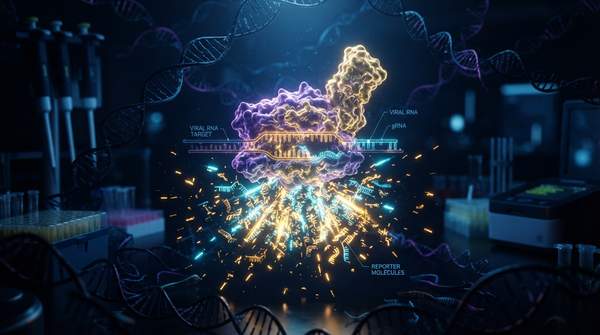
How Collateral Cleavage Gives CRISPR Diagnostics Their Ultra-High Sensitivity
CRISPR diagnostics achieve remarkable sensitivity and specificity through a two-part strategy: programmable nucleic acid recognition by guide RNA, followed by enzyme-driven signal amplification via collateral cleavage. This mechanism converts a single target binding event into a strong, detectable signal, enabling ultra-sensitive detection of minute nucleic acid amounts.
Oct 30, 2026 · 5 min read

How Directed Evolution Works: Mutation, Selection, and Amplification in the Lab
Directed evolution engineers proteins with new or improved functions by mimicking natural selection in a laboratory setting. The process involves an iterative cycle of generating genetic diversity, selecting for desired traits, and amplifying the best-performing variants.
Oct 29, 2026 · 5 min read

Two Families of Wearable Biosensor: What They Measure and How Close They Are to Your Wrist
Wearable biosensors are divided into two main families: biochemical sensors that detect biomarkers in body fluids and physical sensors that measure mechanical forces. Understanding their distinct capabilities and development stages is crucial for personalized health monitoring, with power remaining a key challenge for both.
Oct 28, 2026 · 5 min read

Myotis bat genomes reveal intertwined genetic roots of longevity, viral defense and cancer resistance
Genomic analysis of eight Myotis bat species reveals that their exceptional lifespans, immune adaptations, and cancer resistance are evolutionarily linked traits, stemming from interconnected genetic strategies for viral defense and cell-death pathways.
Oct 27, 2026 · 4 min read

Senolytics vs. Senomorphics vs. Senoreverse: Three Ways Science Is Targeting Aging Cells
Scientists are targeting cellular senescence with three distinct therapeutic approaches: senolytics to eliminate aging cells, senomorphics to mute their harmful signaling, and senoreverse strategies to reprogram them. Each method has a different biological logic, risks, and developmental stage, with none yet approved for general anti-aging use.
Oct 26, 2026 · 5 min read
How Gene Drives Work: The Molecular Mechanics of Biased Inheritance
Gene drives are self-propagating genetic elements that bias their own inheritance, allowing traits to spread rapidly through populations. The CRISPR-Cas9 homing mechanism achieves this by converting heterozygous carriers into homozygous ones in the germline, effectively rewriting Mendelian rules.
Oct 25, 2026 · 6 min read

How AI Accelerates Directed Evolution by Fixing Its Biggest Bottleneck
Directed evolution, a Nobel-winning method for creating new proteins, is significantly accelerated by AI. AI computationally pre-screens millions of protein variants, overcoming the traditional bottleneck of slow experimental screening.
Oct 23, 2026 · 4 min read

SHERLOCK vs. DETECTR: How Cas13 and Cas12a Power Two Different CRISPR Diagnostics
SHERLOCK and DETECTR are foundational CRISPR-based diagnostic platforms that differ in their core molecular machinery: SHERLOCK uses Cas13 for RNA detection, while DETECTR uses Cas12a for DNA detection. Both platforms employ collateral cleavage for signal generation, and understanding their specific enzyme, target, and readout differences is crucial for selecting the right tool for pathogen detection.
Oct 22, 2026 · 5 min read

Intrinsic Capacity: How WHO's Healthy-Aging Measure Works Today, and Where Molecular Biomarkers Are Headed
The WHO defines Intrinsic Capacity by a person's physical and mental abilities, currently assessed via clinical and functional tests. Researchers are exploring molecular biomarkers, like epigenetic and inflammatory markers, to offer a more objective, quantitative measure of this capacity.
Oct 20, 2026 · 5 min read

Beyond Calcium: The Three Mechanisms That Define Modern Osteoporosis Treatment
Modern osteoporosis treatment has evolved beyond calcium, focusing on three core mechanisms: anti-resorptive therapies to slow bone loss, anabolic therapies to build new bone, and non-pharmacological interventions to strengthen the body and prevent falls. Understanding these distinct strategies is key to personalizing patient care.
Oct 19, 2026 · 5 min read
How Epigenetic Changes Drive Aging and Why They Might Be Reversible
Aging is driven by epigenetic changes, reversible modifications that control gene activity without altering DNA. These molecular switches can drift over time, leading to cellular decline, but their reversibility offers promising avenues for interventions to slow or reverse age-related damage.
Oct 11, 2026 · 5 min read

Synthetic Biology's New Frontiers: A Comparative Look at Healthcare, Agriculture, and Industrial Markets
Synthetic biology is rapidly transforming healthcare, agriculture, and industrial markets, each at different stages of maturity. While healthcare leads, all sectors face common challenges like high costs, regulations, and profound ethical questions about creating life.
Oct 11, 2026 · 4 min read

ZFNs, TALENs, or Base Editing: A Researcher's Guide to Choosing the Right Gene Editor
Researchers must choose the right gene editing tool from options like ZFNs, TALENs, and Base Editing based on specific experimental needs. Understanding their distinct mechanisms, precision, and applications is crucial for successful genome engineering and therapeutic development.
Oct 3, 2026 · 5 min read

New Biotech Strategies: Promise and Hurdles for Pest Resistance
While past biotech successes like Bt cotton boosted pest resistance, new strategies like RNAi face significant global hurdles and stalled implementation.
Sep 18, 2026 · 6 min read

AI in biotech poses ethical dilemmas
In a chilling demonstration, researchers weaponized AI-driven drug discovery systems, generating 40,000 toxic molecules and a nerve agent within several hours.
Sep 2, 2026 · 4 min read

What are the Key Factors for Success in Regional Biopharma Hubs?
Last year, over 35 million square feet of lab and research and development properties were under construction globally, a striking surge in new infrastructure that might suggest a booming, insatiable
Aug 19, 2026 · 7 min read

aTyr Pharma faces layoffs amid biotech sector funding crunch
aTyr Pharma, despite holding $58.
Aug 12, 2026 · 3 min read