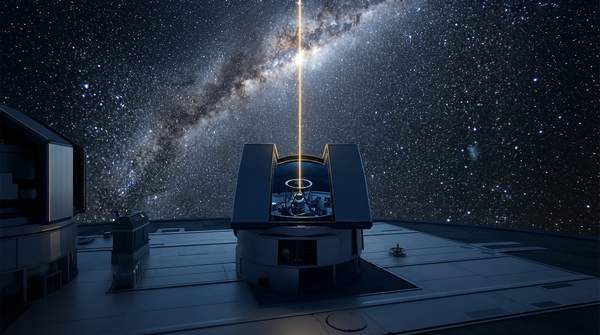
Our own galaxy, the Milky Way, sits at the very center of a cosmic void spanning an astonishing 2 billion light-years wide, a discovery challenging current understanding of the universe's large-scale structure (Newscientist). Cosmic voids, far from being inert empty spaces, are dynamic participants in cosmic evolution, actively pushing matter into denser structures. Their observed properties and evolution, however, may require a drastic modification of our cosmological models, potentially rethinking gravity or the nature of dark matter. This evolving understanding suggests current models will likely need significant refinement, or even a paradigm shift, to fully explain the universe's large-scale structure.
What We Know About Cosmic Voids
- Cosmic voids are vast, underdense regions that constitute the majority of the universe's volume (arxiv).
- These dynamic structures actively transfer matter to surrounding denser cosmic filaments, shaping the large-scale distribution of matter (forbes.com).
- Galaxies within voids exhibit unique characteristics, challenging assumptions about environmental influence on galactic development.
- The increasing emptiness of these voids over cosmic time is a key area of cosmological research.
The Dynamic Evolution of Cosmic Voids and Their Challenge to Cosmology
Cosmic voids exhibit a significant evolutionary trend, becoming progressively emptier toward low redshift (arxiv). This dynamic emptying reveals voids as active shapers of the cosmic web, not passive empty spaces. Intriguingly, new observations indicate that large voids host brighter, more rapidly evolving galaxies than smaller voids (arxiv). This finding is counterintuitive, as less activity and slower evolution would be expected in larger, emptier regions. Furthermore, the void galaxy luminosity function evolves significantly with time, with M* fading and alpha flattening. These complex observed properties and the evolution of cosmic voids demand a drastic modification of current cosmological models, potentially involving a re-evaluation of gravity or the nature of dark matter (Newscientist). This points to a deep inconsistency in our current understanding of the cosmos, particularly given the Milky Way's residence within such an immense void, suggesting our local environment might be an extreme case skewing our perception of universal laws.