
Dark Matter
5 articles
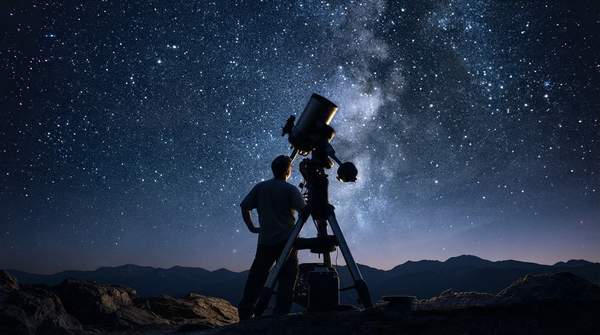
How Gravitational Lensing Lets Astronomers Map Invisible Dark Matter
Gravitational lensing, the bending of light by massive objects, is the most direct method astronomers use to map invisible dark matter. By analyzing distortions in light from distant galaxies, scientists can reveal the distribution and properties of dark matter across cosmic scales.
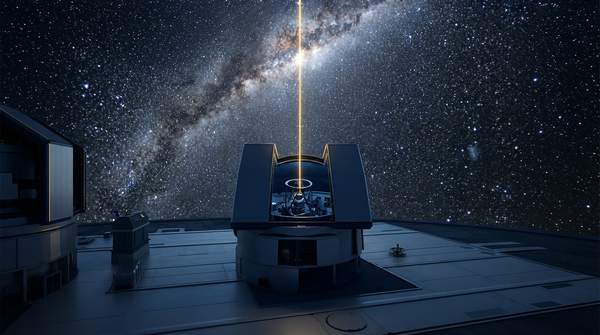
Dark Matter vs. Dark Energy: The Cosmic Forces Shaping Our Universe
Dark matter and dark energy constitute over 95% of the universe, acting as opposing cosmic forces. Dark matter provides gravitational scaffolding for structures, while dark energy drives accelerated expansion.

Scientists Discover Dark Matter Clusters Forming Around Supermassive Black Holes
In five out of 14 galaxies studied, mass increases were observed moving away from the central black hole that could not be explained by visible matter alone.

Cosmic Voids Challenge Understanding of Universe's Structure
Our own galaxy, the Milky Way, sits at the very center of a cosmic void spanning an astonishing 2 billion light-years wide, a discovery challenging current understanding of the universe's large-scale

The Standard Model's Enduring Successes and Persistent Challenges
The Standard Model of particle physics has achieved remarkable success in describing fundamental particles and forces, validated by discoveries like the Higgs boson. However, persistent experimental anomalies and theoretical gaps, such as the exclusion of gravity and dark matter, highlight its incompleteness and the need for physics beyond its current scope.