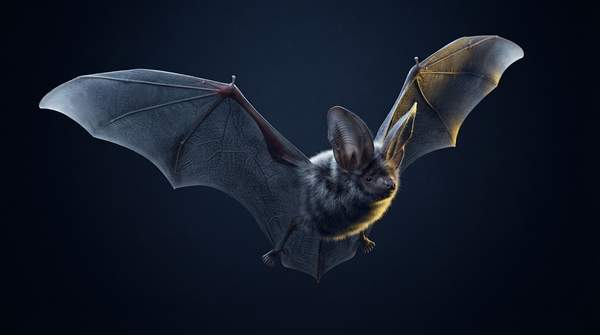
An international research team co-led by scientists at Penn State and the University of Vermont has published near-complete genomes from eight Myotis bat species in the journal Nature, showing that the animals' exceptional lifespans, unusual immune adaptations and apparent resistance to cancer are not separate biological traits but evolutionarily linked ones. The study, published on August 26, 2026, describes new patterns of evolutionary adaptation connecting viral defense, DNA-damage responses and cell-death pathways to dramatic differences in lifespan.
Interconnected Genetic Strategies for a Long Lifespan
Among mammals, larger species generally live longer, and bats are a well-known exception to that rule, far outliving other animals of their small size. The new genomic analysis offers a framework for why: the near-complete genomes of eight Myotis species suggest that viral defense, DNA-damage responses, cancer-related pathways and extreme longevity evolved through overlapping biological systems rather than independent ones.
That framing matters for aging research. If longevity, immunity and cancer resistance share evolutionary roots in bats, they may not be separable biological problems in any mammal, including humans. The Nature paper, whose authors include Juan M. Vazquez and M. Elise Lauterbur, analyzed virus-interacting proteins and positive selection across the eight genomes, and the team reports that the same patterns held when the analysis was repeated on 47 publicly available non-Myotis bat genomes, even when Myotis genomes were excluded.
The study is foundational rather than translational. It identifies genetic patterns and evolutionary relationships; it does not propose treatments, and its conclusions rest on a single genomic study of eight species within one genus, so they may not extend to all bats.