Quantum sensors could allow doctors to pinpoint infections inside individual cells, a precision far exceeding current diagnostic methods, according to the National Science Foundation. This capability promises earlier, more targeted interventions, potentially altering disease progression before symptoms become severe. However, while quantum sensors offer remarkable diagnostic precision at the cellular level, their physical integration into biological systems presents complex engineering challenges. Widespread adoption will depend on overcoming significant material science and bio-integration hurdles, despite the incredibly promising medical applications.
What Are Quantum Sensors and Bio-Integrated Devices?
Smart biosensors, often leveraging nanotechnology, already offer improved diagnostic sensitivity and faster response times compared to traditional methods, as detailed in Nature. These devices, rooted in classical physics, push miniaturization and material science boundaries. They provide incremental advancements for continuous health monitoring, enabling earlier detection of physiological changes.
Quantum sensors, in contrast, harness quantum mechanical phenomena like superposition and entanglement for vastly greater precision. Intriguingly, nature itself offers a precedent: enzymes can work in harmony with quantum states, albeit on very short timescales, according to NCBI. This suggests quantum integration into biological systems may not be entirely unnatural.
For instance, NV-center diamonds, with their similar spin effects, could emulate cryptochromes—light-sensitive proteins found in organisms, as noted by NCBI. Such advanced sensors leverage quantum phenomena for superior performance, fundamentally altering our interaction with biological processes. They offer insights into cellular functions previously inaccessible.
Precision at the Micro-Scale: How Quantum Tech Enhances Biology
Quantum computers can help researchers understand protein folding, according to the National Science Foundation. This capability is vital for drug discovery and understanding disease mechanisms, given protein misfolding's link to neurodegenerative and other complex conditions. Quantum systems' computational power allows simulations beyond classical limits, accelerating foundational biological research.
Yet, the remarkable diagnostic precision of quantum sensors faces a bottleneck: fundamental, non-quantum engineering challenges. Mechanical design, including tensile strength and fatigue resistance, is critical for wearable and implantable biosensors. These devices must move naturally with the body without compromising accuracy or structural integrity, as emphasized in the Nature article. Robust material science and biomechanical integration are essential for long-term stability and patient comfort.
Companies focusing solely on quantum physics without addressing bio-integration's mechanical engineering challenges are, metaphorically, building a Ferrari engine for a car with no wheels. This approach risks significant delays in bringing transformative bio-integrated technologies to market. Integrating sensitive quantum technologies into the human body demands sophisticated mechanical engineering, a task as complex as the quantum physics itself, to ensure functionality and patient comfort.
Beyond Medicine: The Broad Reach of Quantum Sensing
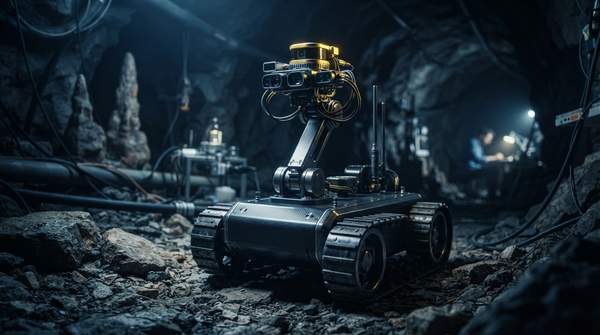
Beyond healthcare, quantum sensors could allow geologists to find subterranean mineral deposits without lifting a shovel, as noted by the National Science Foundation. This versatility offers a non-invasive method for resource exploration, reducing environmental impact and operational costs associated with traditional drilling.
The same principles enabling cellular-level diagnostics extend to other complex environments. Quantum gravimeters, for instance, detect minute changes in gravitational fields, correlating with underground density variations. This allows precise mapping of geological structures and mineral veins, aiding sustainable resource management and infrastructure planning. The underlying power of quantum sensing transcends healthcare, offering transformative potential across diverse fields like environmental science and resource discovery.
The Current Momentum: Why Now?
Significant institutional efforts are already underway to harness quantum technologies for healthcare and life sciences. The QIS and Quantum Sensing in Biology Interest Group (SIG), initiated by NCATS within the NIH-wide QIS Working Group, according to NIH OIR, aims to foster interdisciplinary collaboration, connecting physicists with biologists and medical professionals.
Global initiatives also facilitate access to these advanced tools. For example, such programs democratize access to advanced technology, providing researchers with computational resources without requiring expensive infrastructure.
Significant institutional efforts and global initiatives demonstrate a clear commitment to quantum technology development in critical sectors. However, despite the remarkable promise of quantum sensors for cellular infections, the industry's immediate focus on foundational research and computational applications suggests practical, bio-integrated quantum diagnostics are still years, if not decades, from widespread clinical reality. This phased approach prioritizes understanding before direct physical integration, a pragmatic but slow path.
Getting Started: Learning About Quantum Technologies
What are the benefits of quantum bio-integrated sensors?
Quantum bio-integrated sensors promise enhanced sensitivity and specificity for detecting biomarkers at extremely low concentrations, critical for early disease detection. This precision could enable earlier diagnoses and more accurate monitoring of treatment responses. They also offer the potential for real-time, continuous data from within the body, providing insights into physiological changes.
How do bio-integrated sensors work?
Bio-integrated sensors generally detect specific biological or chemical signals, converting them into electrical signals for analysis. Quantum versions often manipulate and read out particle quantum states, such as electron spins in NV-center diamonds, which are highly sensitive to their local environment. These devices interact directly with biological systems, sensing molecular or cellular changes with unparalleled detail.
What are the latest advancements in quantum sensing technology?
Recent advancements focus on miniaturizing quantum components and improving their stability at biological temperatures, making them more suitable for in-vivo applications. Educational institutions, like MIT, are also expanding offerings in quantum information and computing, signaling a growing focus on training the next generation of quantum engineers and scientists to meet future demand.
The Future of Health is Quantum
While the convergence of quantum physics and biology promises to redefine medical capabilities, widespread adoption of advanced quantum bio-integrated sensors will likely depend on significant breakthroughs in material science and micro-robotics, potentially seeing initial specialized clinical use by companies like IBM Quantum in the next decade, if bio-integration hurdles are effectively addressed.


