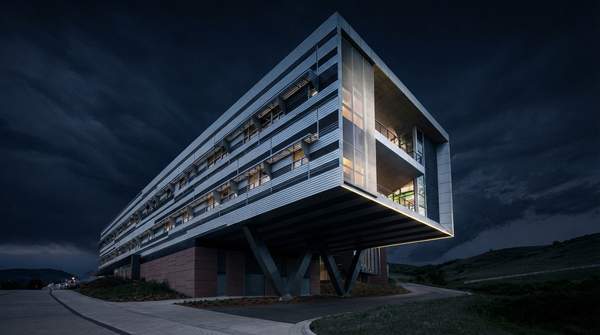
In Virginia, data centers alone consumed an estimated 32 TWh out of 128 TWh total electricity in 2023, making them responsible for a quarter of the state's power usage, according to ElectricChoice. This massive demand, equivalent to powering millions of homes, exposes the digital realm's voracious hunger for constant energy. Across the nation, data centers consumed 4.7% of total U.S. electricity in 2024, as reported by Utilitydive, a figure that continues its swift ascent.
The digital economy demands ever-increasing data center capacity, but this growth directly translates into higher electricity costs and grid strain for everyday citizens. As algorithms grow more complex and cloud services expand, the physical infrastructure supporting this invisible world becomes an ever-thirstier behemoth, drawing power from a grid not built for such rapid, concentrated expansion.
Without significant shifts in energy policy or data center efficiency, consumers should anticipate a future of escalating utility bills and potential energy shortages as the digital infrastructure boom continues. The promise of an always-on digital world carries a tangible cost, one increasingly borne by the households and communities that power it.

The Growing Energy Appetite
- 415 terawatt hours — This was the approximate global data center electricity consumption in 2024, representing about 1.5% of the world's total electricity use, according to Brookings.
- 9.5% to 15.3% — This range indicates the projected share of all electricity in the U.S. that data centers could consume by 2030, as projected by Utilitydive.
- 66 gigawatts (GW) — This is the projected U.S. data center power demand by 2027, nearly doubling from 31 GW in 2025 and 41 GW in 2026, according to Goldman Sachs.
These figures unveil an accelerating trend: data centers are rapidly becoming a dominant force in electricity consumption, far outpacing previous estimates. The U.S. path of data center expansion and energy consumption appears disproportionately aggressive compared to the global average, foretelling a potential crisis if current trajectories hold.
An Unprecedented Construction Boom
| Metric | Early 2021 | 2026 | Source |
|---|---|---|---|
| Data Centers Under Construction in US | About 100 | Nearly 1,000 | CTech |
| Data Centers Under Construction or Planning Across 40+ States | Not applicable | Over 480 | ElectricChoice |
Note: Data for early 2021 and 2026 reflect a significant escalation in construction activity.
The sheer volume of new data center construction across the U.S. portends an imminent, massive surge in power requirements that will severely strain existing grids. While CTech reports nearly 1,000 data centers are under construction, ElectricChoice states over 480 are under construction or in active planning across 40+ states, implying a significant variance in the reported scale of immediate expansion. Regardless of the precise number, this rapid physical expansion is a concrete harbinger of future absolute power demand.
The Rising Cost to Consumers
Average residential retail electricity prices increased by 6% in nominal terms last year, a direct burden on household budgets, according to Utilitydive. This rise coincides with investor-owned utilities seeking $18 billion in rate increases during the same period. These increases are not abstract figures; they are tangible financial pressures on families and small businesses.
Regulators approved 66% of the requested rate increases last year, confirming a significant portion of these costs are passed directly to consumers. The escalating energy demands from data centers fuel these higher electricity bills for households. Utilities successfully shift the burden of increased infrastructure and generation needs, often without explicit public awareness of the true drivers.
Local Impact and Regulatory Pressure
Virginia became the first state to impose a direct tax on data centers based on their electricity consumption, potentially generating $600 million in revenue, according to CTech. This legislative action marks a turning point, as states grapple with the localized grid burdens imposed by these energy-intensive facilities.
A growing recognition among states is that the industry's energy footprint demands direct financial and regulatory accountability. As data center construction accelerates across more than 40 states, similar tax initiatives or regulatory frameworks are likely to emerge, driven by the urgent need to fund grid upgrades and mitigate environmental impacts.
Future Outlook: Policy and Sustainability Challenges
The unchecked growth of data centers is already imposing a hidden tax on every American household, long before their projected 2030 energy demands fully materialize.
- Average residential retail electricity prices increased by 6% last year, according to Utilitydive.
- Investor-owned utilities sought $18 billion in rate increases last year, according to Utilitydive.
This reality means consumers are subsidizing an industrial expansion, paying more for their power as the digital economy expands. The financial burden will only intensify as data center energy demands escalate, demanding a proactive policy response to protect residential ratepayers.
States not proactively taxing or regulating data center energy consumption are effectively subsidizing the digital economy on the backs of their residential ratepayers.
- US data center power demand is projected to nearly double to 66 GW by 2027, according to Goldman Sachs.
- Virginia's direct tax on data centers is expected to generate $600 million in revenue, according to CTech.
Virginia's precedent, coupled with the dramatic projected increase in power demand, suggests other states will soon face similar pressures. Without direct taxation or stringent regulation, the cost of grid upgrades and increased generation will continue to fall disproportionately on ordinary citizens, not the corporations benefiting most from this growth.
The rapid escalation from 100 data centers under construction in 2021 to nearly 1,000 today reveals that the U.S. is not merely expanding its digital infrastructure but undergoing an energy-intensive industrial revolution.
- The number of data centers under construction in the US increased from about 100 in early 2021 to nearly 1,000 in the current year, according to CTech.
- US data center power demand is projected to climb to 66 GW in 2027, according to Goldman Sachs.
This industrial revolution demands immediate, drastic grid upgrades. Current utility rate structures are ill-equipped to fund them without significant consumer burden. The sheer scale and speed of this expansion require a fundamental rethinking of how energy infrastructure is planned, funded, and regulated to avert widespread instability.
If current trends persist, the unchecked expansion of data centers will likely force a national reckoning on energy policy, pushing states to either impose new taxes or risk widespread grid instability and escalating costs for every household.