
Samuel Adebayo
Editorial byline
Samuel Adebayo is an editorial byline for The Scientific Frontier, with a focus on Energy & Environment, Exploration & Discovery, Materials & Engineering. Biographical credentials and external profiles are published only after verification.
Learn more about our editorial process and use of automation in our AI & Automation disclosure.
Coverage Areas
Latest Articles

SEM, TEM, or AFM? Matching the Microscope to the Semiconductor Inspection Task
Choosing the right advanced microscope for semiconductor inspection hinges on whether surface or internal structure analysis is needed, alongside sample preparation and throughput constraints. This guide compares SEM, TEM, and AFM to help engineers select the optimal technique for specific inspection tasks.
Nov 9, 2026 · 5 min read
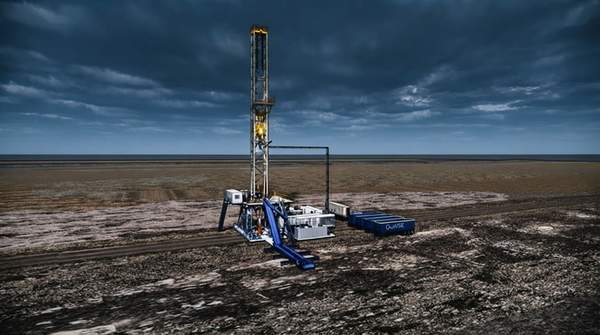
How Enhanced Geothermal Systems Engineer Their Own Reservoirs—and Why Scaling Them Is Still Hard
Enhanced Geothermal Systems (EGS) create electricity by engineering underground reservoirs in hot, impermeable rock, overcoming limitations of conventional geothermal. However, scaling EGS faces significant hurdles like high upfront costs, difficult well construction, and the risk of induced seismicity.
Nov 6, 2026 · 5 min read
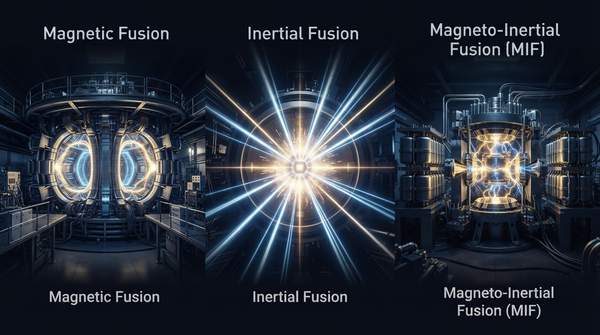
Three Paths to a Star on Earth: How Magnetic, Inertial, and Magneto-Inertial Fusion Differ
Controlled nuclear fusion research is primarily divided into three confinement strategies: Magnetic Confinement Fusion (MCF), Inertial Confinement Fusion (ICF), and Magneto-Inertial Fusion (MIF). Each approach aims to sustain fusion reactions but differs fundamentally in how it manages plasma duration and confinement methods.
Nov 1, 2026 · 5 min read

Graphene, CNTs, Metal Oxides, or Quantum Dots? A Comparative Guide to Nanomaterial Sensor Performance
This guide compares graphene, CNTs, and quantum dots for advanced sensor applications, detailing their performance metrics and ideal use cases. It emphasizes matching nanomaterial properties and hybridization strategies to specific analytes and desired sensing mechanisms for optimal sensor design.
Oct 31, 2026 · 5 min read

Liquid Solvents or Solid Sorbents? The Energy Trade-Offs That Shape Direct Air Capture
Direct air capture (DAC) technologies primarily use either liquid solvents or solid sorbents to capture CO2 from the air. The choice between these methods hinges on their vastly different energy demands, particularly the temperature required for regeneration, influencing cost and feasibility.
Oct 30, 2026 · 6 min read
Screening, Predicting, or Learning: Three Computational Paths to New Materials
Discover the three primary computational approaches to materials discovery: high-throughput screening of existing materials, first-principles prediction of novel structures, and machine learning for data-driven acceleration. Understanding their distinct goals, inputs, and outputs is crucial for selecting the optimal method for your research.
Oct 25, 2026 · 4 min read

Solid-State Batteries for EVs: Why Swapping the Liquid Electrolyte Is Both the Promise and the Problem
Solid-state batteries replace liquid electrolytes with solid ones, offering EVs greater safety, energy density, and faster charging. However, this fundamental change also introduces significant challenges for mass production and economic viability.
Oct 24, 2026 · 5 min read

Four Ways the Ocean Can Be Persuaded to Drink More CO2: A Mechanism Comparison
Ocean carbon dioxide removal (mCDR) encompasses various techniques that create a CO2 deficit in surface seawater, prompting the ocean to absorb more atmospheric CO2. This article compares four leading mechanisms: ocean alkalinity enhancement, direct ocean capture, macroalgae cultivation, and artificial upwelling.
Oct 22, 2026 · 5 min read

Twinning and Phase Change: How New Niobium-Titanium Alloys Stay Tough at 20 Kelvin
New niobium-titanium alloys exhibit remarkable damage tolerance at 20 Kelvin by employing nanoscale twinning and local phase transformation. These mechanisms precede conventional dislocation motion, enabling plasticity and preventing brittle fracture in extreme cryogenic environments.
Oct 20, 2026 · 5 min read

Why Graphene Conducts Heat So Well — and Where That Matters for Electronics and Batteries
Graphene exhibits exceptionally high thermal conductivity due to its unique lattice structure and phonon transport, though precise values are debated based on scattering mechanisms. This property makes it crucial for thermal management in advanced electronics and energy storage.
Oct 19, 2026 · 5 min read
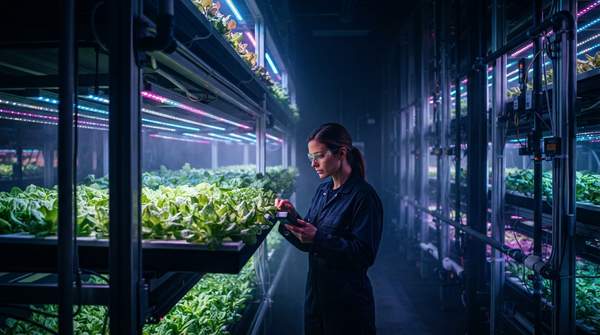
How Vertical Farming Works: Three Technologies That Cut Water and Land Use
Vertical farming replaces traditional agriculture with stacked indoor layers, relying on three core technologies: soilless cultivation, optimized artificial lighting, and controlled environment agriculture. This integrated system significantly reduces water and land use, enabling year-round crop production independent of external conditions.
Oct 19, 2026 · 5 min read

Neutron Diffraction, Inelastic Scattering, or Reflectometry: Matching the Technique to Your Materials Question
Choosing the right neutron scattering technique—diffraction, inelastic scattering, or reflectometry—depends on whether you need to understand static structure, material dynamics, or thin film composition. Each method addresses a distinct scientific question, making the correct selection crucial for effective materials research.
Oct 15, 2026 · 5 min read
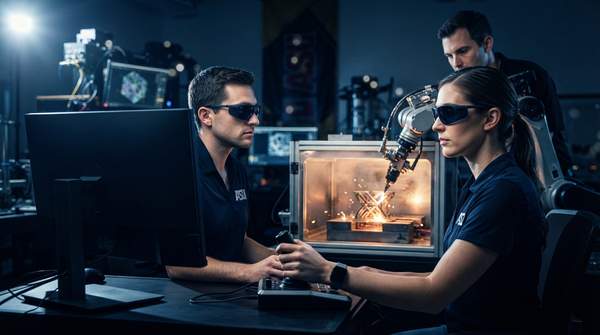
Arkansas State University Secures $2.1 Million Federal Award for AI-Driven Steel Research
Arkansas State University has received a $2.1 million federal award from NIST to enhance its AI-driven steel research and advanced manufacturing capabilities at CAMSM. This funding will support the acquisition of new testing equipment and expand workforce training, benefiting regional steel manufacturers.
Oct 14, 2026 · 3 min read
SLAC to Build ‘Self-Driving’ Lab with DOE Funding to Tame X-Ray Data Overload
SLAC National Accelerator Laboratory has received U.S. Department of Energy funding to develop SPIRE, a "self-driving" laboratory platform. This initiative will leverage artificial intelligence to automate experiments, addressing the critical bottleneck of processing vast amounts of data generated by SLAC's X-ray laser.
Oct 11, 2026 · 4 min read
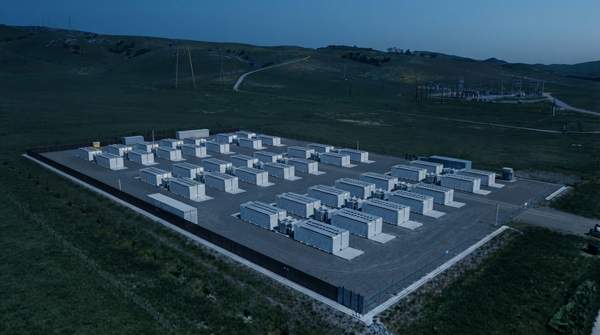
Beyond Lithium: A Strategic Guide to Emerging Grid-Scale Battery Technologies
As renewable energy sources expand, the need for grid-scale energy storage beyond lithium-ion is critical. This guide explores emerging technologies like sodium-ion, vanadium flow, and zinc-based systems, detailing their strategic trade-offs for cost, performance, and sustainability.
Oct 10, 2026 · 4 min read

How Nanomaterials Build Themselves: Principles and Applications
Nanomaterials can spontaneously organize themselves from disordered building blocks into complex, functional structures through a bottom-up process called self-assembly. This strategy, driven by molecular interactions, is crucial for designing advanced materials with tunable properties for applications in medicine and energy.
Oct 9, 2026 · 4 min read
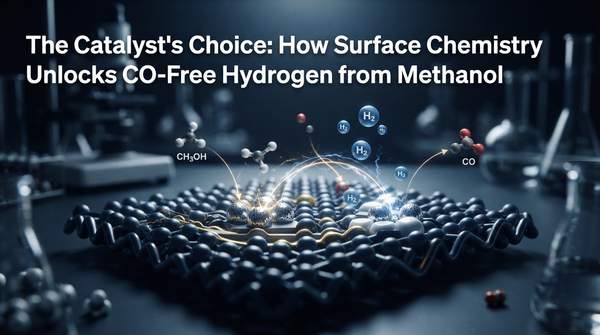
The Catalyst's Choice: How Surface Chemistry Unlocks CO-Free Hydrogen from Methanol
Methanol offers a safe way to store and transport hydrogen, but producing it cleanly requires advanced catalyst design to avoid poisonous carbon monoxide byproducts. By manipulating surface chemistry through palladium alloys or hydroxyl-rich supports, researchers can steer reactions towards pure hydrogen and carbon dioxide.
Oct 6, 2026 · 4 min read

Magnetic vs. Inertial Confinement Fusion: Distinct Pathways to Sustainable Power
Fusion energy research explores two distinct pathways: magnetic confinement fusion (MCF) and inertial confinement fusion (ICF). Understanding their fundamental differences in plasma containment, operational modes, and engineering challenges is key to strategic investment in sustainable power.
Oct 1, 2026 · 5 min read

Top 8 Sustainable Materials for Green Engineering
By 2026, the sustainable materials market is projected to reach over USD 400 billion, yet the most impactful shift for structural integrity might come from a material like engineered bamboo, which can
Sep 7, 2026 · 7 min read

AI Data Centers' Massive Footprint Sparks Local Opposition Amidst Sustainability Push
Seven in 10 Americans reject the construction of an AI data center in their local area, a stark repudiation of the very infrastructure powering our future.
Sep 5, 2026 · 5 min read