Microtesla Magnetic Therapy (MMT) is hypothesized to work through a multi-stage causal chain: a low-intensity electromagnetic field is delivered noninvasively to the brain, where it is proposed to engage redox-sensitive inflammatory networks and modulate neuroimmune activation. The downstream biological effects—reduced inflammation, resolution of oxidative stress, and cellular repair—are then proposed to translate into the cognitive improvements reported in a small randomized pilot study in Long COVID. This article reconstructs that proposed chain from the claims of Fareon, the clinical-stage company behind the platform, and the scientific publications it cites—without independently validating them.
Understanding Microtesla Magnetic Therapy (MMT): A Proposed Mechanism
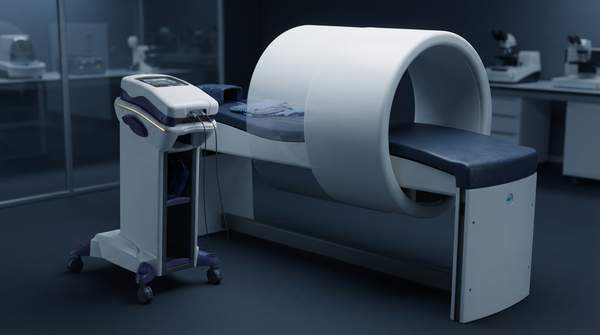
MMT is the core technology of Fareon Restore, a biophysics platform the company describes as a new class of noninvasive brain therapies delivered through precisely calibrated electromagnetic fields. In clinical trials, it has been administered via a lightweight headset connected to a tabletop console. The company frames the mechanism as activating biological pathways associated with the resolution of inflammation and oxidative stress, tissue repair, and recovery in the brain.
The scientific framing comes from the study preprint, which states that the therapy's findings suggest MMT engages redox-sensitive inflammatory networks and modulates neuroimmune activation—pathways the authors describe as increasingly recognized as central drivers of cognitive dysfunction. On that basis, they position MMT as a nonpharmacologic strategy that directly targets neuroinflammatory biology. Note that the specific magnetic field parameters of the device are proprietary and are not described in the publicly available materials.