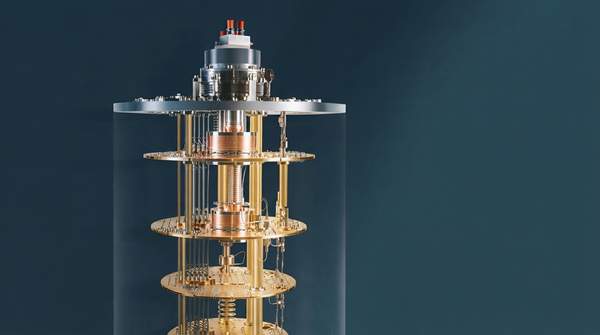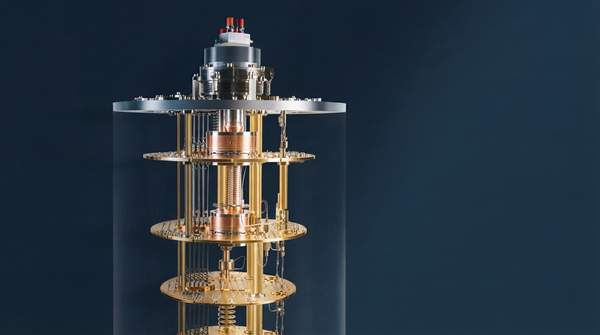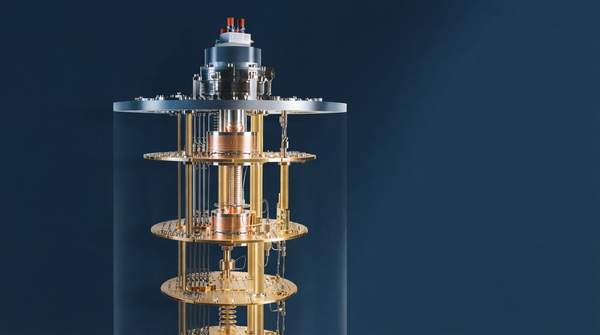
Quantum annealing and gate-based quantum computing are two fundamentally different ways of using quantum hardware, and the difference matters most when you have an optimization problem in hand. Quantum annealing is a specialized analogue technique that searches for the lowest-energy state of a physical system, making it a natural fit for optimization and sampling tasks. Gate-based quantum computing is a universal, procedural model that applies sequences of quantum logic gates to a quantum state, allowing it to run a much broader range of algorithms—including, but not limited to, optimization. Neither is definitively better; they are tools with different specializations.
Introduction to Quantum Computing Paradigms
Both paradigms rest on the same quantum-mechanical foundations—superposition and entanglement—but they diverge completely in how they turn those phenomena into computation. A gate-based machine treats computation as a sequence of reversible operations. As one technical explainer of gate-based systems notes, quantum computers use reversible gates, unlike the irreversible AND, OR, and XOR gates of classical hardware, preserving quantum properties like entanglement and superposition throughout a calculation.
An annealer, by contrast, does not run a program in any conventional sense. It encodes a problem directly into the physical interactions of its qubits and lets the system's natural dynamics do the work. A comparison of gate and annealing approaches for engineering design tasks, published in Cambridge's journal for AI in engineering, describes quantum annealing as a form of analogue computation whose problem formulation depends on the specific hardware chosen. That single distinction—digital procedure versus analogue energy minimization—shapes everything else about the two approaches, from the algorithms they run to the problems they suit.
Quantum Annealing: Finding Optimal Solutions
Quantum annealing solves problems by mapping them onto an energy landscape and then letting quantum physics pull the system toward its lowest-energy state. As Shuxian Jiang's Purdue University dissertation on quantum annealing for optimization explains, the technique uses the principles of quantum mechanics to solve unconstrained optimization problems, and researchers have actively searched for practical problems where it holds an advantage over classical algorithms.
The mechanism that distinguishes it from classical simulated annealing is quantum tunneling. Classical annealing relies on thermal fluctuations to jiggle a system out of local minima, but if the energy barriers are tall and narrow, heat alone may not carry the system over them. Quantum annealing instead employs quantum fluctuations to gradually evolve the system into its lowest energy state, allowing it to tunnel through barriers that would trap a purely classical search. Jiang's dissertation notes that although quantum computers are not believed to solve NP-complete problems efficiently in general, evidence suggests tunneling effects can bring quantum speedup over classical computation for some problems in NP.
There is a practical caveat, though. As the Cambridge-published comparison observes, as a problem's complexity grows—more constraints, objectives, and variables—the energy landscape becomes more rugged, the energy gap shrinks, and the annealing time must increase or more samples must be taken. Tunneling helps, but it does not abolish hard landscapes.
Gate-Based Quantum Computing: Universal Computation
Gate-based quantum computing is the model most people picture when they hear "quantum computer." The developer defines a sequence of quantum logic gates—common examples include X, Y, Z, Hadamard, and rotation gates—that perform unitary transformations on qubits, transforming the system's state step by step through a coherent evolution. Because nearly all major hardware modalities support this model, including superconducting circuits, trapped ions, and neutral atoms, it has become the field's dominant paradigm.
Its universality comes at a cost. QuEra Computing, a gate-based hardware developer, explains that noise causes gate errors, where a physical operation doesn't perfectly match its mathematical ideal, leaving the qubit in a slightly wrong state. If gate fidelity is too low, cumulative errors make the output of a large circuit indistinguishable from random noise. Every additional gate compounds this risk, which is why error rates, not raw qubit counts, dominate practical gate-based computing today.
The trade-off is clear: the gate model can express essentially arbitrary algorithms, but each step must be executed with enough fidelity that the whole sequence survives. The annealer avoids this cumulative-error problem by design—there is no long gate sequence to corrupt—but in exchange it can only do one thing: search an energy landscape.
Quantum Computing Paradigms: A Comparative Overview
The table below contrasts the two paradigms across the dimensions that actually drive a technology choice: how they compute, what they compute, and what they are used for today. Read down each column and the pattern emerges—annealing trades generality for focus, while the gate model trades focus for breadth.
| Dimension | Quantum Annealing | Gate-Based Quantum Computing |
|---|---|---|
| Computational model | Analogue computation; evolves toward the lowest energy state of a global system | Digital and procedural; transforms a quantum state step by step through coherent evolution |
| Problem type | Unconstrained optimization and sampling from energy-based distributions | Universal paradigm for broader, algorithm-driven applications, including NP-hard logistics scheduling |
| Core mechanism | Quantum fluctuations and tunneling through energy barriers that trap classical methods | Quantum logic gates performing unitary transformations on qubits |
| Algorithm style | Adiabatic algorithms that search an energy landscape for a global minimum | Developer-defined gate sequences built with quantum programming tools |
| Key limitation | Rugged landscapes shrink the energy gap, forcing longer annealing times or more samples | Cumulative gate errors can make a large circuit's output indistinguishable from random noise |
| Current use case | Optimization and sampling problems, e.g. Set Cover with Pairs and integer factorization | Broad algorithm research, e.g. the travelling salesperson problem and job-shop scheduling |
Two rows deserve emphasis. The "core mechanism" row is the physical heart of the comparison: tunneling versus gates. The "key limitation" row is the practical one—annealing degrades gracefully into longer run times, while the gate model degrades into unusable output. Which failure mode you can tolerate depends entirely on your problem.
Application Domains and Problem Suitability
So which problems go where? For annealing, the answer is problems whose structure can be expressed as an energy landscape. Jiang's dissertation studies two with both theoretical and practical importance: Set Cover with Pairs, a generalization of Set Cover requiring each element to be covered by at least two objects, and integer factorization. D-Wave, the best-known annealer manufacturer, adds that sampling from energy-based distributions is a computationally intensive task that is an excellent match for its machines' approach of seeking low-energy states.
Gate-based systems take the broader portfolio. The Cambridge comparison cites a 2024 study by Dalal and colleagues that applied quantum algorithms to NP-hard logistics scheduling, covering both the travelling salesperson problem and an industrial job-shop scheduling problem for an automated laboratory robot, in pure and hybrid versions. The same comparison also notes that the two approaches demand different preparation from practitioners: problem formulation and the required background theory differ between them, with annealing formulation tied to the specific hardware chosen.
One caution on speed claims: Anastasia Marchenkova, writing on the annealer-versus-gate distinction, reports that Google announced the D-Wave machine was more than 10⁸ times faster than simulated annealing on a single core—yet Selby's classical algorithm still outperformed the D-Wave machine at the time. Reported speedups are benchmark-specific, not general guarantees, and the choice between paradigms should rest on problem structure rather than headline numbers.
Choosing the Right Quantum Approach
When approaching a complex computational problem, evaluate whether it is primarily an optimization or sampling task, which may favor quantum annealing, or a broader algorithmic problem requiring universal computation, which points to gate-based quantum computing. The measurable indicator is the problem's mathematical structure: whether it can be expressed as an energy landscape whose global minimum is the answer, or whether it requires sequential logic operations and general algorithm execution. A rugged landscape with many constraints also signals longer annealing times or more samples, while a long algorithmic pipeline signals exposure to cumulative gate errors.
Neither choice is permanent, and neither is a winner. Annealing is a focused instrument for one class of problem; the gate model is a general one that pays for its breadth in error sensitivity. Identify which structure your problem has, and the appropriate paradigm follows from the evidence rather than from preference.