Graphene earns its place in flexible electronics through three properties that rarely coexist in a single material: it conducts electricity efficiently, bends and stretches without losing function, and remains optically transparent because it is atomically thin. Discovered in 2004, the two-dimensional carbon sheet has since moved into flexible solar cells, field-effect transistors, nanogenerators and, most prominently, wearable sensors that sit directly on human skin. The practical question for engineers is not whether graphene works, but how each property translates into a specific device function—and where fabrication methods like laser-induced graphene make that translation economical.
Graphene's Fundamental Properties for Flexible Electronics
Graphene is a two-dimensional material, and that geometry drives nearly everything else. Because charge carriers travel through an atomically thin sheet, graphene combines excellent electrical conductivity with thermal conductivity and notable mechanical strength, as researchers writing on laser-induced graphene fabrication describe. The same thinness that supports fast charge transport also lets light pass through with minimal absorption, which is why transparency is cited alongside conductivity and mechanical performance as the foundation for flexible-electronics applications.
The mechanical side matters just as much as the electrical one. Graphene is roughly 200 times stronger than steel, yet its pliability allows devices built on it to bend, stretch and conform to irregular surfaces—curved skin, joints, textiles—without the cracking that afflicts rigid conductors. A review of graphene-based flexible and wearable sensors by Qing Zhang and colleagues at the Army Armored Forces College and Tsinghua University notes that these sensors have drawn wide attention for human health monitoring, telemedicine and human-machine interface systems, precisely because the material survives the deformation those uses demand.
The Graphene Flagship, the European research consortium, frames the opportunity in similar terms: graphene and other two-dimensional materials are "extremely suitable" for wearable products because of these inherent properties, offering a platform for low-cost, multifunctional devices with form factors that conventional materials cannot match. Prototypes of health trackers, environmental sensors, durable e-textiles and flexible power sources have already demonstrated functions beyond the current state of the art, according to the consortium.
Graphene's Properties and Their Functional Impact
The clearest way to see why graphene matters for flexible and wearable devices is to trace each property from physics to function. The table below maps graphene's core characteristics to the advantage they create and the application where that advantage is realized, so a reader can follow, for example, how atomic thinness becomes optical transparency becomes a workable flexible display component.
| Graphene Property | Resulting Functional Advantage | Example Application |
|---|---|---|
| Electrical conductivity | Efficient charge transport through an atomically thin sheet, enabling electrodes that carry signals without bulky metal layers | Transparent conductive films and printed sensor electrodes |
| Mechanical flexibility and strength (about 200 times stronger than steel) | Devices bend, stretch and conform to irregular surfaces without losing function | Wearable strain and bending sensors on skin and joints |
| Piezoresistance under deformation | Electrical resistance changes predictably with bending or strain, converting motion into a measurable signal | Resistive bending sensors for motion capture and health monitoring |
| Optical transparency from atomic thinness | Light passes through with minimal absorption, allowing a component to sense part of the light while transmitting most of it | Flexible displays and light sensors placed over screens |
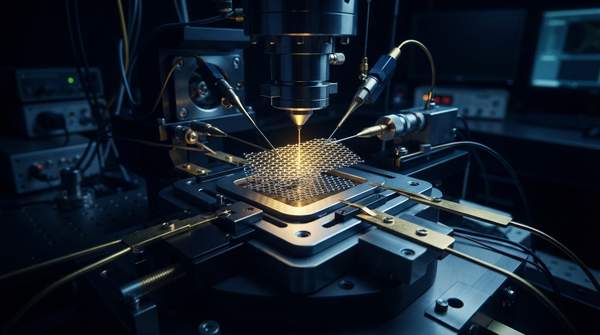
| Laser-induced graphene (LIG) fabrication | Conductive graphene electrodes patterned directly onto flexible polymer films in a simple printing process | Cost-effective wearable sensors on polyimide |
Read down the first column and the pattern is consistent: no single property is unique to graphene, but the combination is. A transparent material that is not conductive, or a conductor that is not flexible, forces designers into trade-offs that graphene sidesteps—which is why the Flagship positions it as an alternative material platform rather than an incremental improvement.
Graphene in High-Performance Wearable Sensors
The most concrete demonstration of these principles is the wearable strain and bending sensor. In work published in npj Flexible Electronics, Altynay Kaidarova and colleagues exploited the piezoresistance of graphene electrodes printed on flexible polyimide films: when the film bends, the graphene's electrical resistance shifts in a predictable way, and that shift becomes the sensor signal. The team used laser-induced graphene—generated by a simple printing process on the lightweight polymer—to build wearable resistive bending sensors, and reported that the approach "paves the way for many cost-effective measurement systems."
Laser-induced graphene also anchors a separate study on fine motion capture for pilots, which characterized sensors fabricated by applying accumulative laser energy three times without altering the polyimide substrate. Those sensors achieved a high sensitivity of 41.4 and exceptional stability across tensile strains from 0.2 percent to 8 percent, performing reliably during hand relaxation and finger bending. The significance for engineers is that the laser route converts graphene from a laboratory material into something patternable directly onto a flexible substrate, skipping more complex transfer steps.
Health monitoring is where these sensors meet the user. The Graphene Flagship describes a prototype incorporating a flexible light sensor that optically records the change in blood vessel volume during the cardiac cycle, extracting heart rate, respiration rate and blood pulse oxygenation; a graphene health patch integrated onto a mobile phone screen measures and displays vital signs in real time when a user touches the screen. Notably, that device uses ambient light to operate, supporting low power consumption and continuous monitoring. Related graphene photodetector research reaches the same destination: noninvasive on-skin detection of heart rate, respiration rate and SpO2, plus wireless probing of the environmental UV index, with integration plausible in garments, jewelry, headwear and footwear.
Outlook: Overcoming Commercialization Hurdles
The honest caveat in nearly every source is economic, not scientific. The motion-capture researchers state plainly that high manufacturing costs and inefficient production methods currently hinder graphene's large-scale industrialization, even as its application prospects remain broad. The npj Flexible Electronics authors echo this: graphene's outstanding properties have initiated a flood of research, yet its economic impact is hampered by difficulties in production and practical application. Industry reporting on graphene oxide places the field at a pivot point, transitioning from research to early commercialization, with growth driven by demand for lightweight, durable, high-performance devices.
For graphene-based flexible electronics to achieve widespread commercialization, significant advancements are needed in manufacturing processes to reduce costs and ensure consistent material quality. The measurable indicator of progress is increased availability of standardized, cost-effective graphene production methods and a reduction in the variability of graphene material properties. Until those arrive, laser-induced graphene's simple printing route on polyimide offers the clearest working template: a fabrication method already delivering stable, high-sensitivity wearable sensors while sidestepping the cost barriers that keep much of graphene's promise confined to the laboratory.
Sources
- The development of graphene and its use in flexible electronics | Highlights in Science, Engineering and Technology — Drpress
- Graphene-Based Flexible and Wearable Sensors: Fabrication, Application and Perspective — SciOpen
- A Flexible Wearable Sensor Based on Laser-Induced Graphene for High-Precision Fine Motion Capture for Pilots - PMC
- Graphene research, innovation and collaboration — Graphene Flagship
- Wearable multifunctional printed graphene sensors - npj Flexible Electronics — Nature
- Graphene research, innovation and collaboration — Graphene Flagship
- Flexible graphene photodetectors for wearable fitness monitoring - PMC
- Future of Graphene Oxide in Flexible Electronics — Patsnap Eureka