Biotechnology & Genetics
How Collateral Cleavage Gives CRISPR Diagnostics Their Ultra-High Sensitivity
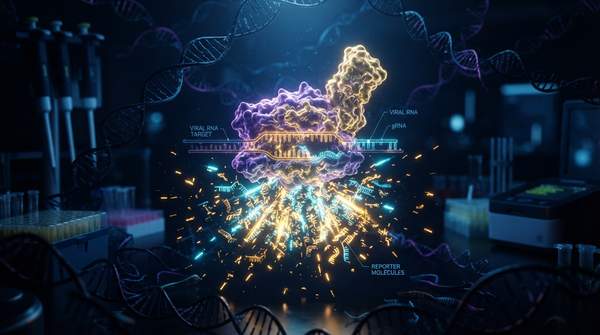
CRISPR diagnostics achieve remarkable sensitivity and specificity through a two-part strategy: programmable nucleic acid recognition by guide RNA, followed by enzyme-driven signal amplification via collateral cleavage. This mechanism converts a single target binding event into a strong, detectable signal, enabling ultra-sensitive detection of minute nucleic acid amounts.
Maria Flores·October 30, 2026