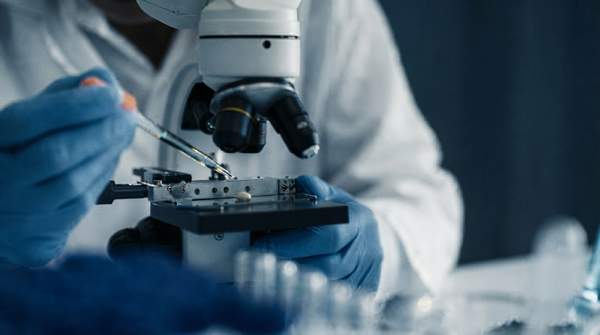
Directed evolution engineers proteins with new or improved functions by harnessing the same logic that drives natural selection, only compressed into weeks inside a laboratory. Instead of designing a protein atom by atom, researchers create a large pool of gene variants, identify the rare variants whose proteins perform a desired task, and use those winners as the starting material for the next round. The method's power was formally recognized in 2018, when the Nobel Prize in Chemistry was awarded to Frances Arnold for pioneering the directed evolution of enzymes. Understanding the process means understanding its iterative three-phase cycle: generating genetic diversity, screening or selecting for function, and amplifying the best performers to seed another round.
How Directed Evolution Works: Mutation, Selection, and Amplification in the Lab
Directed evolution engineers proteins with new or improved functions by mimicking natural selection in a laboratory setting. The process involves an iterative cycle of generating genetic diversity, selecting for desired traits, and amplifying the best-performing variants.
MF
Maria Flores
October 29, 2026 · 5 min read