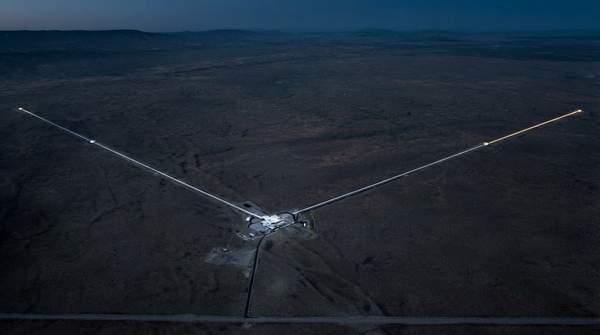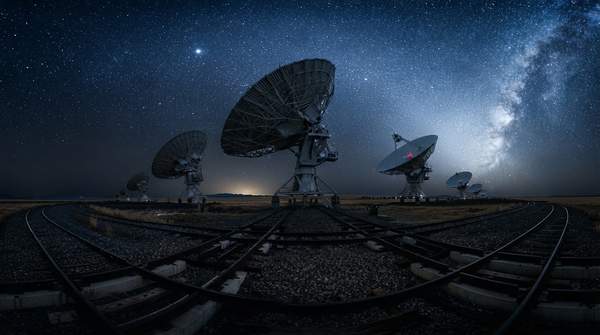
Astronomical interferometry is the technique that lets astronomers pick up details that even the largest single telescopes cannot resolve. By combining the light collected at two or more separated telescopes, observatories synthesize a single "virtual" instrument with a diameter much larger than any real telescope could have, as the European Southern Observatory explains. The payoff is angular resolution improved by orders of magnitude: at visible and infrared wavelengths, interferometers push detail down to the milli-arcsecond level, and radio arrays depend on the same principle to match the image quality of large optical telescopes. This article walks through the physics, step by step, and then compares how two flagship arrays, ALMA and the VLTI, apply it at opposite ends of the spectrum.
The Challenge of Astronomical Resolution
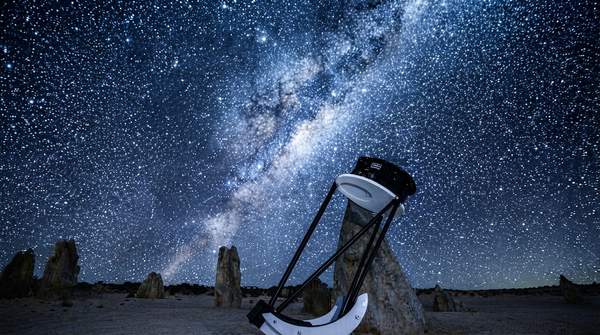
The resolution of a telescope is set by the size of its primary mirror or lens: the larger the diameter, the finer the details it can distinguish. But there are physical limits to how large a single telescope can be built. At a certain point, gravity becomes a significant impediment to the structure itself, compromising the optical precision and alignment of the mirror, as Gail Schaefer of the CHARA array at Georgia State University explains in her introduction to the technique.
The problem is most acute at long wavelengths. Because diffraction has its largest effect for long wavelengths, radio and millimeter-wave astronomers depend on interferometry to achieve image quality on par with conventional large-aperture visible and infrared telescopes, notes a technical review of radio and optical interferometry prepared for a Springer volume on planets, stars and stellar systems. The solution in every waveband is the same: build arrays of smaller telescopes and link them together to synthesize a larger aperture. Such an array is called an interferometer, and it is now the instrument of choice for imaging the wide range of spatial structures found in both Galactic and extragalactic targets at radio wavelengths.