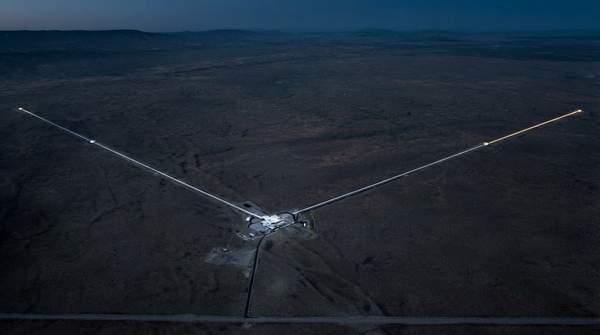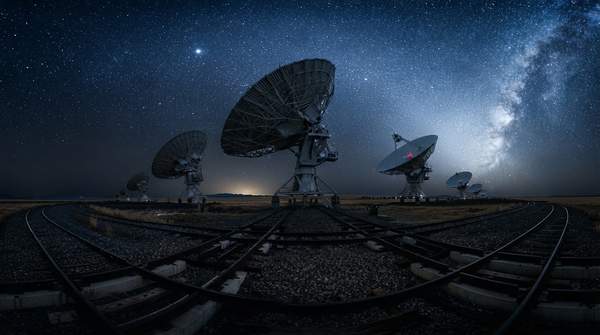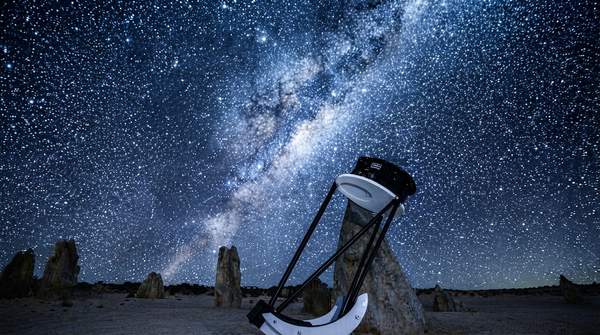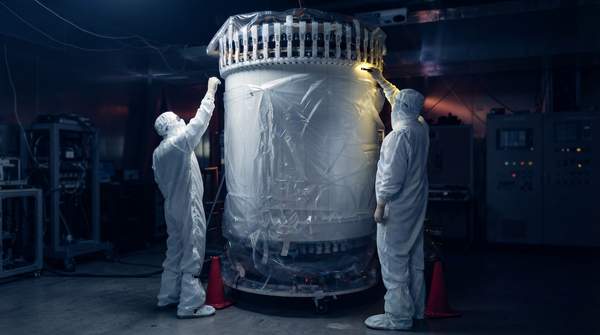
Detecting dark matter is not one experiment but three complementary strategies, each exploiting a different interaction between hypothetical dark matter particles and ordinary matter. Brown University's Particle Astrophysics group, which runs its own dark matter searches, describes the field as resting on three primary methods: direct detection, indirect detection, and production in particle colliders. Understanding how these approaches differ — in mechanism, in the signal they chase, and in the candidates they can plausibly find — explains why no single experiment can settle the question, and why physicists pursue all three at once.
The Elusive Universe: Why We Need Multiple Dark Matter Searches
Dark matter has stayed hidden for so long because, as Brown's group puts it, it "rarely interacts with regular (what physicists call baryonic) matter or with light other than through gravitation." That gravitational influence is the only confirmed evidence of its existence, and gravity alone reveals nothing about what the particles are made of.
The leading candidate is the Weakly Interacting Massive Particle, or WIMP, with axions and more exotic possibilities also under discussion. Brown's researchers note that the most probable WIMP candidate is the neutralino, a particle predicted by supersymmetry. A 2012 review of dark matter evidence and detection methods posted to arXiv adds an important caution for expectations: even as indirect detection reached sensitivities where some candidates could in principle be seen, observed hints — such as a structure at 130 GeV in Fermi-LAT gamma-ray data — remained non-conclusive. Because any candidate interacts so feebly, each detection method probes only part of the possible interaction landscape, which is precisely why the three-pronged structure exists.