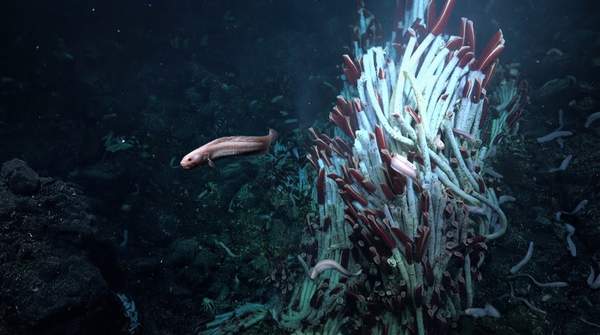
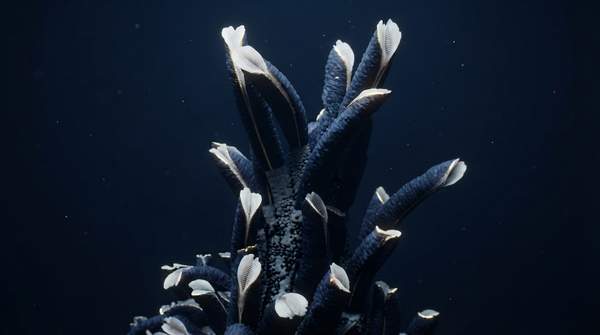
In the Clarion-Clipperton Zone, a single deep-sea region, scientists recently described 24 new species, including an entirely new superfamily of amphipods, even as mining machines threaten to destroy similar undiscovered life. This vast abyssal plain, spanning 4.5 to 6 million square kilometers, continues to reveal unique deep-sea biodiversity at a rapid rate, underscoring our profound ignorance of the ocean's biological composition.
Humanity is just beginning to uncover the deep sea's vast, unique biodiversity, but industrial mining operations are already causing significant ecological damage to these same fragile environments. This tension between discovery and destruction risks irreversible losses to global biodiversity.
Without immediate, robust international governance and a moratorium on deep-sea mining, critical deep-sea ecosystems and their undiscovered species are likely to be irrevocably harmed before their scientific value can be fully understood. This destruction occurs under the purview of international bodies tasked with both exploration and resource management.
1. Clarion-Clipperton Zone: Deep-Sea Exploration's Urgent Crossroads
In March 2026, researchers formally described 24 new deep-sea species, including a new superfamily and family of amphipods, from the Clarion-Clipperton Zone, according to Intelligent Living. This scientific effort to map deep-sea life in the CCZ is part of the International Seabed Authority’s Sustainable Seabed Knowledge Initiative. However, a 2025 study indicated deep-sea mining machine impacts resulted in 37 percent lower macrofaunal density and 32 percent lower species richness inside mining tracks compared to nearby areas, also reported by Intelligent Living. This simultaneous discovery of new life and measurable ecological damage highlights a critical governance conflict within these promising uncharted deep-sea regions.
| Aspect | Scientific Promise (Clarion-Clipperton Zone) | Ecological Cost (Clarion-Clipperton Zone) |
|---|---|---|
| Recent Discoveries | 24 new deep-sea species, including a new amphipod superfamily, formally described in March 2026. | 37 percent lower macrofaunal density in mining tracks. |
| Biodiversity Impact | Potential for millions of undiscovered species and genetic lineages. | 32 percent lower species richness in mining tracks. |
| Governance Context | International Seabed Authority’s Sustainable Seabed Knowledge Initiative supports mapping. | International Seabed Authority oversees mining operations causing documented harm. |
| Long-term Outlook | Unparalleled insights into abyssal ecosystems and evolution. | Irreversible loss of unique, unknown deep-sea biodiversity. |
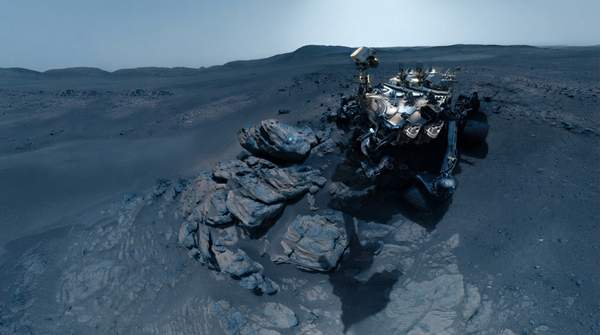
Assessing deep-sea environments requires distinct methodologies. Scientific efforts in the Clarion-Clipperton Zone use advanced submersibles and ROVs to collect samples for morphological and genetic analysis, leading to discoveries like the 24 new species, including a new amphipod superfamily, as detailed by ScienceDirect. This systematic approach maps deep-sea life incrementally. Conversely, ecological impact evaluation employs quantitative methods. A 2025 study measured macrofaunal density and species richness, finding 37 percent lower density and 32 percent lower richness in mining tracks compared to control areas. These quantifiable damages directly contradict the International Seabed Authority’s Sustainable Seabed Knowledge Initiative, which aims for sustainable biodiversity understanding, as reported by Intelligent Living.
The discovery of a new amphipod superfamily in the Clarion-Clipperton Zone, while mining simultaneously reduces species richness by 32% in the same area, reveals a critical failure in global environmental governance: we are destroying the deep ocean's unique biodiversity faster than we can even name it. The International Seabed Authority's dual role in promoting both scientific exploration and resource exploitation creates an inherent conflict, where industrial activities undermine conservation efforts before comprehensive understanding is achieved.
Without a global moratorium and robust international governance, the deep ocean's unique biodiversity appears destined for irreversible harm, sacrificing invaluable scientific discovery for short-term mineral extraction.
What are the least explored parts of the ocean?
Beyond the well-known abyssal plains, the ocean's deepest trenches, such as the Mariana Trench and the Puerto Rico Trench, remain largely unexplored below 6,000 meters. Polar abyssal zones and sub-seafloor environments also present vast, uncharted territories, potentially harboring unique microbial communities adapted to extreme conditions.
What are the biggest mysteries of the deep sea?
Significant mysteries include the mechanisms of chemosynthesis that support entire ecosystems around hydrothermal vents, the full extent of viral diversity and its role in nutrient cycling, and the potential for novel biochemical compounds with pharmaceutical applications. The adaptations of extremophiles to immense pressure and total darkness also present ongoing scientific puzzles.
What are the benefits of deep-sea exploration?
Deep-sea exploration offers benefits beyond biodiversity discovery, including insights into Earth's geological processes, climate regulation, and the potential for new material sciences derived from unique biological adaptations. For instance, enzymes from deep-sea microbes exhibit stability at high temperatures and pressures, offering applications in biotechnology and industrial processes.