
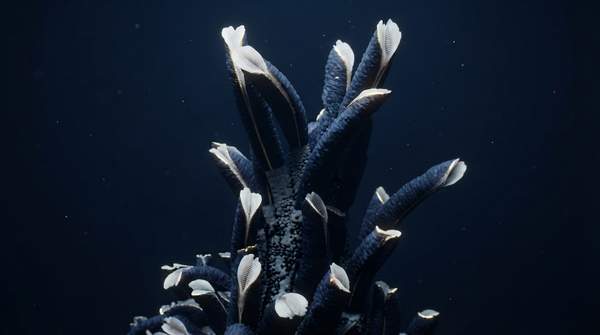
Deep-sea hydrothermal vents on Earth host unique ecosystems where life thrives under conditions once thought impossible, providing critical insights into the potential for life in extraterrestrial environments. These ecosystems, powered by chemosynthesis rather than sunlight, are sustained by extremophiles—organisms adapted to extreme pressure, temperature, and chemical toxicity. Astrobiologists and marine biologists study these Earth-based systems as direct biological analogs for potential life forms and habitability criteria on icy ocean worlds such as Europa and Enceladus.
The Extreme World of Deep-Sea Hydrothermal Vents
Deep-sea hydrothermal vents are dynamic environments driven by volcanic heat beneath the seafloor. Seawater penetrates cracks in the crust, undergoes chemical reactions, and emerges as hot, acidic fluids, sometimes exceeding 400°C (750°F), according to the Woods Hole Oceanographic Institution. These vents create ecosystems that are constantly forming and being destroyed as volcanic activity fluctuates over decades or centuries. Organisms in these environments must contend with perpetual darkness, freezing cold temperatures in the surrounding water, immense hydrostatic pressure, and high concentrations of toxic chemicals.
The deep ocean, including these vent systems, represents a significant portion of Earth's biosphere, with most life existing at great depths and within the oceanic crust. Organisms here thrive under pressures exceeding 10 MPa (100 bars), adapting their metabolic strategies to cope with pressure, temperature, and limited nutrient availability, as noted by Carnegie Science. The study of these extremophiles has profoundly expanded our understanding of life's resilience and adaptability on Earth.
Chemosynthesis: The Foundation of Vent Life
Unlike surface ecosystems that rely on photosynthesis, deep-sea vent communities are sustained by chemosynthesis. This process involves microbes metabolizing chemical compounds released from the vents, such as hydrogen sulfide, methane, and iron, to produce energy. This chemical energy forms the base of the food web, supporting diverse microbial and macrofaunal communities, as highlighted by NASA Astrobiology.
The Woods Hole Oceanographic Institution emphasizes that the discovery of life at vents revolutionized the understanding of where and how life can exist on Earth. This energy generation method is independent of sunlight, utilizing chemical gradients resulting from geological activity. NASA Astrobiology further notes that minerals like metal hydrides found around alkaline hydrothermal vents can act as catalysts for reactions that form small organic compounds, contributing to the chemical basis of these ecosystems.


