The fundamental difference between the two workhorse techniques for reading exoplanet atmospheres comes down to how finely they slice starlight. Standard transmission spectroscopy records the broad changes in a star's spectrum as a planet transits in front of it, revealing general atmospheric properties but often producing shallow, blended spectral features. High-resolution spectroscopy, typically defined in the research literature as resolving powers of roughly R ≳ 20,000–25,000 and beyond, separates starlight into fine enough channels to resolve individual absorption lines from specific atoms and molecules. That single capability lets astronomers uniquely identify chemical species and recover signals that clouds and haze would otherwise dilute.
Understanding Exoplanet Atmosphere Characterization
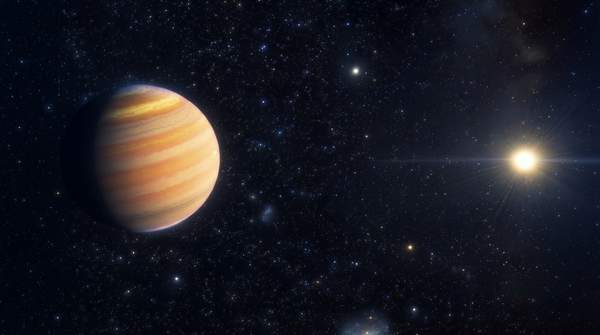
The underlying observation is the same in both cases, and it depends on geometry. As NASA's Scientific Visualization Studio explains, when a planet orbiting a distant star is aligned just right, the host star's light passes through the planet's atmosphere before reaching our telescopes. The atmosphere alters that light, and by analyzing its spectrum, astronomers can determine what the atmosphere is made of. Both techniques exploit this transit geometry; they differ in what happens to the light after it is collected.
Transmission spectroscopy is the dominant method for atmospheric characterization because it works on planets too close to their stars to image directly. The technique does not capture light from the planet itself but rather the imprint the planet's atmosphere leaves on starlight. That imprint is subtle, which is why the details of how the spectrum is recorded—coarsely or finely—matter so much to the final scientific yield.