Healthy cognitive aging is not a story of simple decline. It is a negotiation between two forces: age-related changes in how brain regions connect, and the brain's own adaptive capacity, known as neuroplasticity. Research on brain networks shows that highly connected "hub" regions are both the most vulnerable points in the aging brain and the most important engines of compensation. The practical upshot is that lifestyle factors — physical exercise, mentally stimulating activity, and diet — act on precisely these mechanisms, supporting the brain's ability to reorganize itself and maintain function in later life.
Understanding Neural Networks and Aging
Your brain does not work as a collection of isolated parts. It operates as large-scale networks in which regions communicate continuously, even while you rest. Neuroscientists measure this communication as "functional connectivity," and imaging studies of older adults consistently show that these networks change with age in characteristic ways.
A review of connectivity research in aging and dementia describes one of the most consistent findings: older brains show lower efficiency in higher-order networks, and alterations to a "rich club" network hub reduce communication between brain regions, impacting efficient higher-order cognitive functions. These functional network changes, the review's authors argue, are likely a driving force behind aging in higher-order cognitive processes such as attention, memory, and executive control.
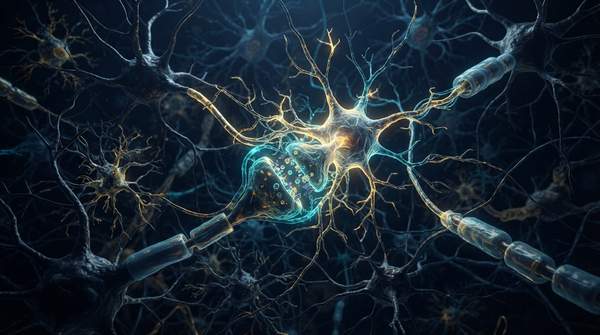
What makes this picture more hopeful is that aging is not purely subtractive. A study of neural network changes in normal aging and early dementia, led by neurologist Hirohisa Watanabe and colleagues, observed that aging is also accompanied by increased connectivity of large-scale networks with outside regions, which could potentially serve as an important compensatory mechanism. In other words, the aging brain does not just lose connections — it also builds new ones, rerouting traffic around weakened areas.
This dual process — structural and functional change on one side, adaptation on the other — is the frame within which every lifestyle strategy discussed below should be understood. The question is not whether the brain changes with age; it does. The question is which changes it can absorb, redirect, or offset.