If your target sits on the cortical surface and you need broad, low-cost modulation, transcranial direct current stimulation (tDCS) is the simplest entry point. If you need to drive neurons to fire and map function at the cortex, transcranial magnetic stimulation (TMS) is the established tool. If your target lies deep in the brain and you need millimeter-scale focus, transcranial focused ultrasound (tFUS) is the technique whose physical properties make that possible. The choice hinges on two variables: where your target is, and how focal your modulation must be.
Introduction to Non-Invasive Brain Stimulation Techniques
Non-invasive brain stimulation (NIBS) lets researchers and clinicians modulate neural circuits without implanting electrodes. TMS and tDCS have long anchored both clinical and basic NIBS research, and tDCS in particular has spread widely thanks to its simplicity, low cost, and ease of implementation, with therapeutic and safety guidelines now available. But as a 2026 bibliometric analysis by Guodong Wang and Shuang Wu notes, conventional NIBS techniques face a fundamental physical trade-off between stimulation depth and focality. Newer approaches, most notably focused ultrasound, were developed specifically to push past that trade-off, and a review of deep brain stimulation methods describes FUS as a noninvasive neuromodulation technique with high spatial resolution and penetration depth.
Transcranial Magnetic Stimulation (TMS): Mechanism, Applications, and Limitations
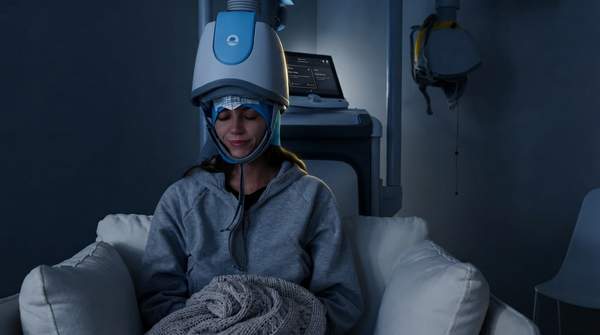
TMS uses magnetic pulses from an electromagnetic coil placed on the scalp to create electric current in targeted areas of the brain. That current stimulates neurons to discharge action potentials—the communicative signals used inside the brain—making TMS one of the few non-invasive methods capable of directly eliciting neural firing. It is delivered under clinician supervision, and it is FDA-approved for and used to treat moderate and severe depression.
Its targeting depends heavily on hardware and setup. The two main coil types carry different trade-offs: a figure-eight coil provides focal stimulation, while an H-coil allows deeper penetration. Advanced systems add neuronavigation based on individual MRI scans or qEEG analysis, and with these systems clinicians can target specific regions—such as the left dorsolateral prefrontal cortex in depression protocols—with millimeter accuracy. Without neuronavigation, or when stimulating deeper regions, resolution degrades: as Brainbox, a neurotechnology information provider, explains, TMS faces a trade-off between depth and accuracy, and stimulating deeper brain regions compromises spatial resolution.
Transcranial Direct Current Stimulation (tDCS): Mechanism, Applications, and Limitations
tDCS applies weak direct electrical currents to the scalp through electrodes, modulating neuronal excitability in targeted regions. It belongs to the broader transcranial electrical stimulation (tES) family, which offers multiple modalities researchers can tailor to specific needs, and it is relatively affordable and portable compared to TMS devices. Because of these practical strengths, tDCS has been widely applied in cognitive research and rehabilitation, and researchers have explored it for cognitive enhancement, motor rehabilitation, mood modulation, pain management, and neurological conditions such as epilepsy and stroke.
The limitation is physical and well documented. When employing tES, the current is impeded by the skull, so only a fraction of the total applied current reaches the intended cortical site. What does arrive diffuses broadly: tDCS provides less focused stimulation, with electrical flows spreading across wider brain regions between the anode and cathode electrodes. The result is multi-centimeter-scale spatial resolution and limited penetration—fine for modulating a general cortical area, poor for isolating a small or deep structure.
Focused Ultrasound (FUS): Mechanism, Applications, and Advantages
Transcranial focused ultrasound uses steered acoustic energy to modulate neural circuits through the intact skull. Depending on the ultrasound intensity level, tFUS supports brain tissue ablation, blood-brain-barrier opening, and neuromodulation, as a simulation study published in npj Acoustics by Haoming Huo and colleagues outlines. Variants of the approach include tFUS, focused ultrasound neuromodulation (FUN), low-intensity focused ultrasound (LIFU), and transcranial pulse stimulation (TPS).
Its distinguishing feature is targeting. A bioRxiv simulation study of random-array transducers reports that tFUS enjoys high spatial precision at the millimeter scale and can be steered to modulate shallow cortical areas or penetrate deeper brain regions by modulating the source signal or using various transducers. Brainbox likewise states that these techniques surpass TMS and tES in spatial resolution and depth of stimulation. Unlike current impeded by the skull or magnetic fields that weaken with distance, ultrasound waves can be focused at depth—though readers should note that much of the targeting evidence comes from simulation work, and the technique remains newer than the established pair.
Comparative Overview of Non-Invasive Brain Stimulation Techniques
The table below juxtaposes the three techniques across a consistent set of dimensions—mechanism, spatial resolution, penetration depth, and key advantage—to make the fundamental trade-offs visible at a glance. Read down each column to see why a given technique suits a given target: the mechanism determines what the skull does to the signal, which in turn determines resolution and depth.
| Technique | Physical Mechanism | Spatial Resolution | Penetration Depth | Key Advantage |
|---|---|---|---|---|
| TMS | Magnetic pulses from a scalp coil induce electric current that drives neurons to fire action potentials | Millimeter accuracy with neuronavigation (MRI or qEEG-based); multi-centimeter scale without it, and degrading further for deeper targets | Limited; primarily superficial cortex, though H-coils allow deeper penetration at a cost in focality | Directly induces action potentials; used for functional mapping and FDA-approved for moderate and severe depression |
| tDCS | Weak direct current via scalp electrodes modulates neuronal excitability | Poor; current diffuses broadly between anode and cathode, multi-centimeter scale | Limited; skull impedance means only a fraction of applied current reaches superficial brain tissue | Simple, low-cost, portable; widely used in cognitive research and rehabilitation with established safety guidelines |
| tFUS | Focused acoustic energy steered through the skull; intensity level determines ablation, blood-brain-barrier opening, or neuromodulation | High; millimeter-scale precision reported in simulation studies | Deep; can be steered to shallow cortex or deeper regions depending on transducer and source signal | Combines focal targeting with deep reach, enabling modulation of subcortical structures non-invasively |
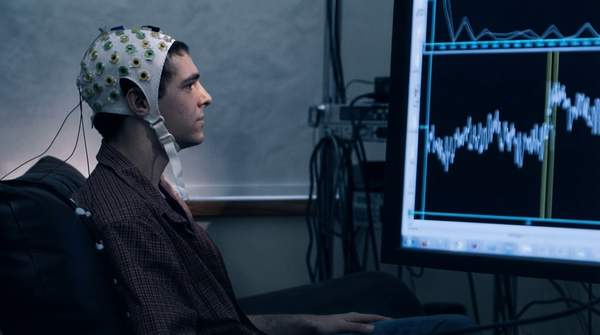
The pattern that emerges is a clean division of labor. TMS and tDCS can widely modulate superficial brain regions but with limited, multi-centimeter-scale spatial resolution and limited deep-brain penetration ability. tFUS inverts that constraint: it holds millimeter-scale precision while reaching deeper structures. No single technique dominates—the right choice follows from your target's depth and the focality your question demands.
Selecting the Optimal Technique for Your Needs
Turn the comparison into a decision sequence. First, locate your target: if it is a superficial cortical region, all three techniques are physically capable of reaching it, and you can proceed to the second question. If it is a deep or subcortical structure, tFUS is the technique whose physical properties support focal modulation there, while TMS and tDCS are constrained by the depth-focality trade-off.
Second, ask what kind of modulation you need. If you need neurons to actually fire—as in functional mapping or connectivity studies—TMS's ability to induce action potentials is distinctive, and neuronavigation can give you millimeter-level targeting at the cortex. If a modest, broad shift in cortical excitability fits your hypothesis and budget matters, tDCS's simplicity and established safety guidelines make it the accessible option. If precision at depth is the requirement, tFUS is the evidence-supported candidate, with the caveat that its targeting evidence rests substantially on simulation studies and it is the least mature of the three.
Third, weigh practical context. TMS requires clinician supervision and specialized coils; tDCS devices are affordable and portable enough that some versions are compact for potential supervised home use; tFUS requires transducer systems and, in its higher-intensity applications, clinical infrastructure. None of these considerations overrides the physics, but they shape feasibility once the physics permits a choice.
Making an Evidence-Based Choice for Brain Stimulation
Neuroscientists and clinicians should select a non-invasive brain stimulation technique by aligning the required spatial resolution and penetration depth with the specific research question or therapeutic target. The decision framework follows directly from each technique's physical mechanism: magnetic induction, transcranial current, or focused acoustic energy each impose different limits on focality and reach, and no navigation system or coil design fully escapes them.
Two boundaries on this guide deserve emphasis. It compares physical principles and targeting capabilities, not clinical efficacy for specific disorders, and it offers no treatment protocols or device-operating guidance. It is written for researchers and clinicians, not as medical advice for patients.
The measurable test of a good selection is straightforward: the successful modulation of the intended brain region, confirmed by functional imaging or behavioral outcomes, indicates an appropriate technique selection. If your chosen method produces that confirmed modulation at your target—cortical or deep, focal or broad—you have matched the tool to the question; if not, the depth-focality trade-off documented above tells you which alternative to try next.
Sources
- Frontiers | Across established non-invasive neuromodulation and emerging deep-targeting strategies: a comparative…
- Review of Noninvasive or Minimally Invasive Deep Brain Stimulation - PMC
- Transcranial Ultrasound Stimulation (TUS)/Transcranial Focused Ultrasound Stimulation (tFUS) — Brainbox
- Comparative Analysis of Brain Stimulation Techniques: tES vs TMS — Neuroelectrics
- Flexible ultrasound array for subcortical brain stimulation in humans: a simulation study - npj Acoustics — Nature
- Improving Targeting Specificity of Transcranial Focused Ultrasound in Humans Using a Random… — bioRxiv