
All Stories

Why Hurt Can Turn Into Fear or Anger With Bio-Emotive Framework
When unprocessed emotional hurt lingers, it often transforms into more complex states like fear and anger, impacting mental, physical, and relational health. The Bio-Emotive Framework , a unique methodology for individua…

Solid-State Batteries for EVs: Why Swapping the Liquid Electrolyte Is Both the Promise and the Problem
Solid-state batteries replace liquid electrolytes with solid ones, offering EVs greater safety, energy density, and faster charging. However, this fundamental change also introduces significant challenges for mass production and economic viability.

Neutron Stars Make the Difference: Why Some Gravitational Wave Mergers Glow and Others Stay Dark
Neutron stars are the key difference in gravitational wave mergers, enabling the detection of light, the creation of heavy elements like gold and platinum, and unlocking new insights through multi-messenger astronomy. Unlike black hole mergers, those involving neutron stars provide a dual signal of gravitational waves and light, offering a more complete picture of cosmic events.

Four Ways the Ocean Can Be Persuaded to Drink More CO2: A Mechanism Comparison
Ocean carbon dioxide removal (mCDR) encompasses various techniques that create a CO2 deficit in surface seawater, prompting the ocean to absorb more atmospheric CO2. This article compares four leading mechanisms: ocean alkalinity enhancement, direct ocean capture, macroalgae cultivation, and artificial upwelling.

MHD, PIC, or Hybrid: Picking the Right Simulation for Your Plasma Physics Problem
Choosing the right plasma simulation method—MHD, PIC, or hybrid—is critical for astrophysical research. The optimal choice depends on the specific physics required, the scales involved, and computational constraints.

How EcoVantage Marine Measures up Against 5 Other Solar-Powered Marine Gear Choices
For today's boat owner, energy independence isn't just a convenience; it's a strategic necessity. With U.S. diesel prices soaring more than 60% since early 2022, according to PBS reports, the appeal of harnessing solar a…

How a Speech Brain-Computer Interface Turns Attempted Speech Into Words
Speech brain-computer interfaces (BCIs) restore communication for individuals with severe paralysis by recording neural signals, decoding them into intended words, and converting that intent into text or synthesized speech. This three-stage process aims to empower users to speak on their own terms.

How Transmission Spectroscopy Reads Exoplanet Atmospheres—and What the Fingerprints Reveal
Transmission spectroscopy analyzes starlight filtered through exoplanet atmospheres to reveal their chemical composition, using absorption patterns as fingerprints. This method provides insights into planet formation and potential habitability across various exoplanet classes.

SHERLOCK vs. DETECTR: How Cas13 and Cas12a Power Two Different CRISPR Diagnostics
SHERLOCK and DETECTR are foundational CRISPR-based diagnostic platforms that differ in their core molecular machinery: SHERLOCK uses Cas13 for RNA detection, while DETECTR uses Cas12a for DNA detection. Both platforms employ collateral cleavage for signal generation, and understanding their specific enzyme, target, and readout differences is crucial for selecting the right tool for pathogen detection.

Intrinsic Capacity: How WHO's Healthy-Aging Measure Works Today, and Where Molecular Biomarkers Are Headed
The WHO defines Intrinsic Capacity by a person's physical and mental abilities, currently assessed via clinical and functional tests. Researchers are exploring molecular biomarkers, like epigenetic and inflammatory markers, to offer a more objective, quantitative measure of this capacity.
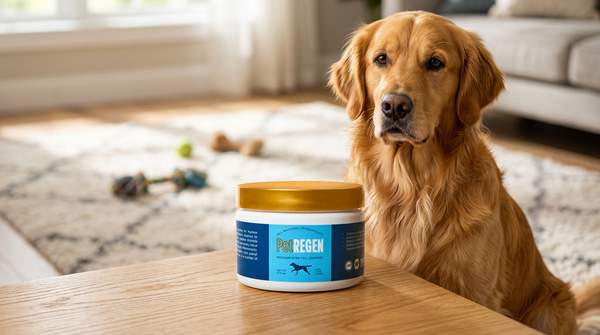
Can PetREGEN Support Dogs With Torn ACL Injuries? What Pet Parents Should Know
PetREGEN is a regenerative health supplement designed to support dogs with torn cranial cruciate ligament (CCL) injuries, offering a science-backed nutritional strategy for recovery and long-term joint health. It aims to support the body's natural ability to repair itself, moving beyond symptom management.

Choosing Between LIME, SHAP, and Attention: A Researcher's Guide to Interpretable AI
This guide helps researchers choose between LIME, SHAP, and attention mechanisms for interpretable AI, explaining their mechanisms, scopes, and model compatibility. It provides a decision framework to match techniques to specific research needs for uncovering hidden structures and generating testable hypotheses.

Computational Mind vs. Navigating Mind: The Metaphor Fight Reshaping How Neuroscience Thinks About Thought
Neuroscience has long viewed the brain as a computer processing information, but a new "navigating mind" metaphor is gaining traction. This alternative frames cognition as an embodied system orienting itself in space and time, potentially reshaping research priorities.
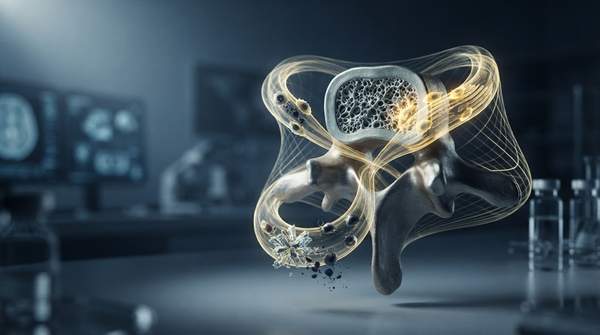
Beyond Calcium: The Three Mechanisms That Define Modern Osteoporosis Treatment
Modern osteoporosis treatment has evolved beyond calcium, focusing on three core mechanisms: anti-resorptive therapies to slow bone loss, anabolic therapies to build new bone, and non-pharmacological interventions to strengthen the body and prevent falls. Understanding these distinct strategies is key to personalizing patient care.
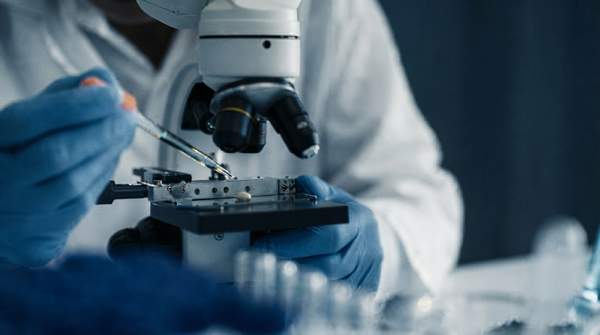
How AI Accelerates Directed Evolution by Fixing Its Biggest Bottleneck
Directed evolution, a Nobel-winning method for creating new proteins, is significantly accelerated by AI. AI computationally pre-screens millions of protein variants, overcoming the traditional bottleneck of slow experimental screening.

Mental Health Support for Neurodivergent Teen Boys at Braveminds Academy
Finding the right mental health support for a struggling adolescent son can be a daunting task for any family. When neurodivergence is a factor, the need for specialized, structured care becomes even more critical. Brave…
How Cryo-Electron Tomography Captures Molecular Machines Inside Living Cells
Cryo-electron tomography (cryo-ET) allows scientists to create detailed 3D images of molecular machines within their native cellular environments. By flash-freezing cells and computationally reconstructing multiple 2D images, cryo-ET reveals molecular structures and their functional context in situ.
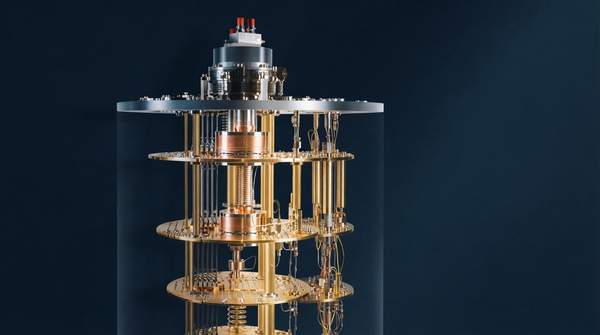
Three Paradigms, One Bottleneck: Where AI and Quantum Computing Actually Meet for Combinatorial Optimization
A review of AI and quantum computing for combinatorial optimization reveals three paradigms, with AI-for-QO showing measurable benefits today while Q-for-AI and co-optimization remain largely unproven on current hardware due to significant system engineering and hardware constraints.

Twinning and Phase Change: How New Niobium-Titanium Alloys Stay Tough at 20 Kelvin
New niobium-titanium alloys exhibit remarkable damage tolerance at 20 Kelvin by employing nanoscale twinning and local phase transformation. These mechanisms precede conventional dislocation motion, enabling plasticity and preventing brittle fracture in extreme cryogenic environments.
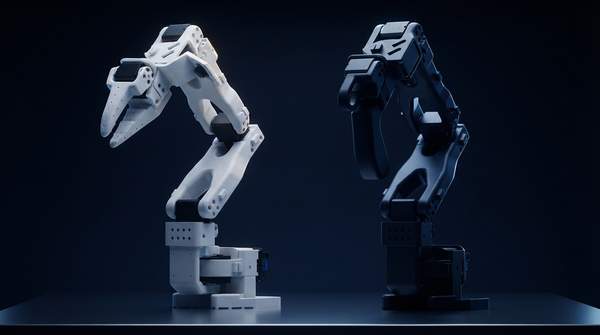
Serial, Parallel, or Delta? Choosing the Right Robotic Manipulator for Your Lab
Choosing the right robotic manipulator for lab automation involves understanding the trade-offs between workspace, speed, and rigidity offered by serial, parallel, and Delta architectures. This guide helps match robot characteristics to specific lab tasks, ensuring optimal performance and selection.

Why Busy Professionals Still Struggle With Therapy Waitlists (and What Helps)
In today's fast-paced professional world, success often comes with immense pressure. Yet, the very individuals who navigate high-stakes decisions and demanding schedules frequently encounter a significant roadblock when …

Why Graphene Conducts Heat So Well — and Where That Matters for Electronics and Batteries
Graphene exhibits exceptionally high thermal conductivity due to its unique lattice structure and phonon transport, though precise values are debated based on scattering mechanisms. This property makes it crucial for thermal management in advanced electronics and energy storage.
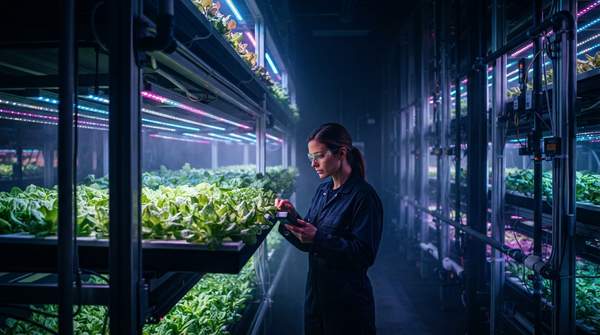
How Vertical Farming Works: Three Technologies That Cut Water and Land Use
Vertical farming replaces traditional agriculture with stacked indoor layers, relying on three core technologies: soilless cultivation, optimized artificial lighting, and controlled environment agriculture. This integrated system significantly reduces water and land use, enabling year-round crop production independent of external conditions.

Four Roads to a Fault-Tolerant Quantum Computer: Superconducting, Trapped-Ion, Photonic, and Topological Qubits Compared
This article compares four leading quantum computing hardware approaches: superconducting, trapped-ion, photonic, and topological qubits. Each modality presents unique trade-offs in speed, fidelity, and scalability, with no single technology currently excelling across all metrics.