
All Stories
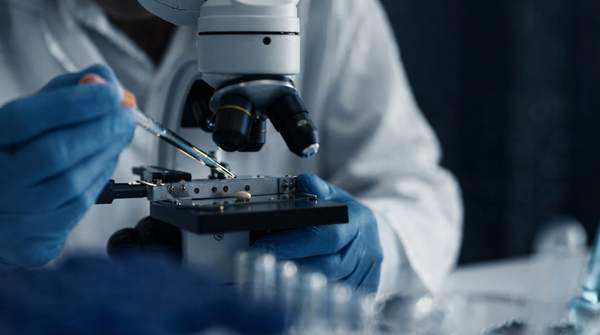
Four Hurdles Between Biohybrid Computing and the Clinic: Stability, Signals, Scale, and Rules
Biohybrid computing, merging living neural tissue with electronics, faces four critical hurdles for clinical translation: ensuring long-term interface stability, efficient signal transduction, computational scalability, and robust ethical/regulatory governance.

Recognizing Anxiety: A Gentle Guide to Seeking Support from Solace Grove Behavioral Health
Recognizing anxiety's subtle signs is crucial for seeking support. Solace Grove Behavioral Health offers a gentle, integrated care approach in Wisconsin, addressing both mental health and substance use challenges to provide comprehensive treatment.

Why Quantum Computers Beat Classical Ones Only on Certain Problems: Superposition, Entanglement and Interference Explained
Quantum computers are specialized machines whose advantage lies in solving specific problems, not in general speed. This advantage stems from quantum principles like superposition, entanglement, and interference, which enable them to tackle complex tasks exponentially faster than classical computers.

How Perseverance Hunts for Life: The Scan, Analyze, Sample Workflow Aboard NASA's Mars Rover
NASA's Perseverance rover employs a systematic scan-analyze-sample workflow to search for signs of ancient microbial life on Mars, using advanced instruments for landscape surveying, remote chemical analysis, close-up investigation, and caching compelling samples for potential return to Earth.

Exascale Computing Explained: The Quintillion-Calculation Machines and Where They Live
Exascale computing represents a significant leap in computational power, enabling machines to perform a quintillion calculations per second. These advanced supercomputers are being deployed globally, particularly in the US and Europe, to tackle complex scientific challenges and drive innovation across various fields.
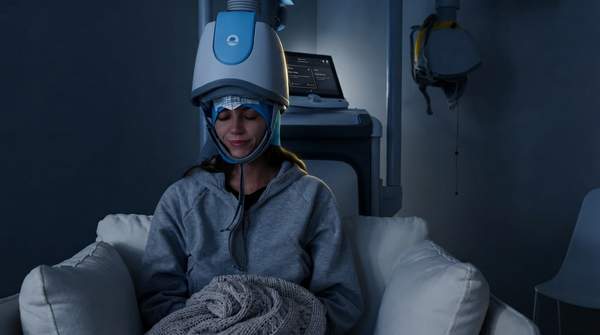
TMS vs. tDCS vs. Focused Ultrasound: Which Non-Invasive Brain Stimulation Technique Fits Your Target?
Choosing between TMS, tDCS, and focused ultrasound (FUS) for non-invasive brain stimulation depends on your target's location and required focality. TMS is for cortical firing, tDCS for broad, low-cost modulation, and FUS for deep, millimeter-scale focus.

Acute and Chronic Wound Care at Klinik Menara in Shah Alam
Navigating wound care, whether from an unexpected injury or a chronic condition, requires timely and professional medical attention. For residents in Shah Alam, understanding the process can make a significant difference…
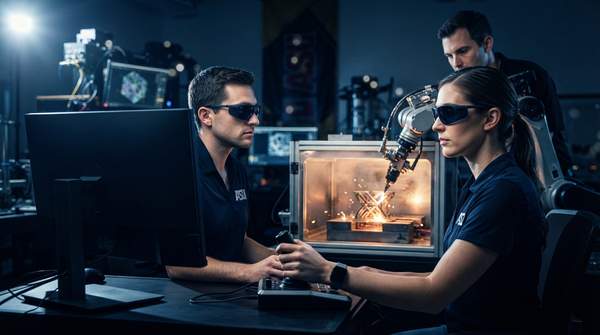
Arkansas State University Secures $2.1 Million Federal Award for AI-Driven Steel Research
Arkansas State University has received a $2.1 million federal award from NIST to enhance its AI-driven steel research and advanced manufacturing capabilities at CAMSM. This funding will support the acquisition of new testing equipment and expand workforce training, benefiting regional steel manufacturers.
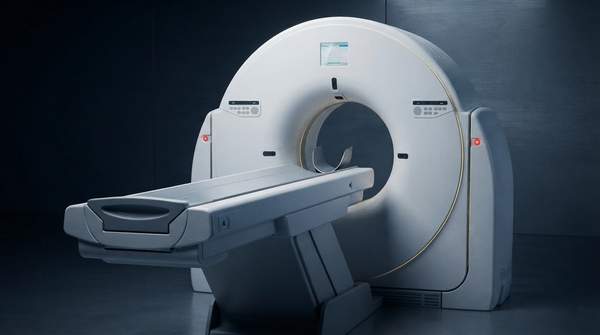
How X-ray CT Works, and Where It Fits in Materials Science versus Biological Research
X-ray computed tomography (CT) enables non-destructive 3D imaging by analyzing X-ray attenuation from multiple angles. This article details its core principles and contrasts its distinct applications, advantages, and limitations in materials science versus biological research.

How Gravitational Microlensing Finds Distant, Low-Mass Worlds That Other Methods Cannot See
Gravitational microlensing is a unique exoplanet detection method that leverages the bending of light by a foreground star to magnify a background star. This technique excels at finding distant, low-mass planets and free-floating worlds that are beyond the reach of other observational methods.

Four Technical Paths to AI Alignment: What Robustness, Interpretability, Controllability, and Ethicality Each Try to Solve
AI alignment is approached through four distinct technical strategies: robustness, interpretability, controllability, and ethicality, each addressing specific failure modes. Understanding these complementary paths and their limitations is crucial for evaluating AI safety proposals, especially given alignment's context-dependent nature.

5 Overlooked Signs Your Pet Needs PetREGEN for Natural Repair and Joint Support
Subtle changes in your pet's behavior or physical condition can indicate a deeper need for support. This article highlights five overlooked signs, from mobility issues to skin irritation, that suggest your pet could benefit from PetREGEN for natural repair and joint health.

How Your Brain's Networks Adapt With Age — and Why Hubs Hold the Key
Cognitive aging involves changes in brain networks and the brain's adaptive capacity, neuroplasticity. Highly connected brain hubs are key to compensation but also vulnerable, with lifestyle factors like exercise and diet supporting their function.

Neutron Diffraction, Inelastic Scattering, or Reflectometry: Matching the Technique to Your Materials Question
Choosing the right neutron scattering technique—diffraction, inelastic scattering, or reflectometry—depends on whether you need to understand static structure, material dynamics, or thin film composition. Each method addresses a distinct scientific question, making the correct selection crucial for effective materials research.
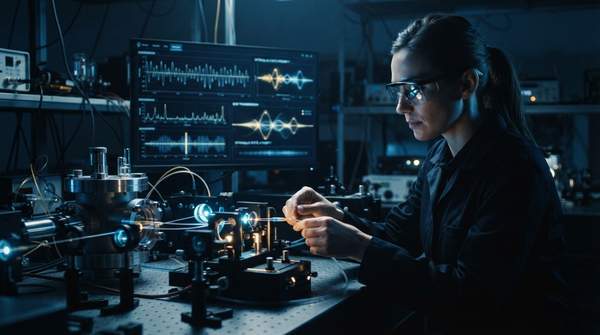
How Quantum Entanglement Turns Eavesdropping Into a Detectable Event
Quantum entanglement enables secure communication by making eavesdropping physically detectable, a core principle of Quantum Key Distribution (QKD). While offering information-theoretic security, current QKD faces distance limitations, driving research into quantum repeaters for future long-distance networks.
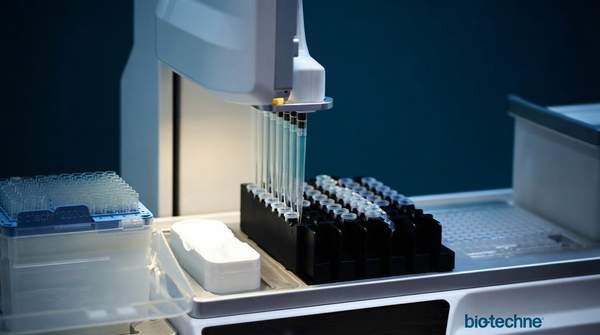
SLAC to Build ‘Self-Driving’ Lab with DOE Funding to Tame X-Ray Data Overload
SLAC National Accelerator Laboratory has received U.S. Department of Energy funding to develop SPIRE, a "self-driving" laboratory platform. This initiative will leverage artificial intelligence to automate experiments, addressing the critical bottleneck of processing vast amounts of data generated by SLAC's X-ray laser.

How Bill's Galaxy Explains BHT's Effect on Lipid-Enveloped Viruses Like Herpes Simplex
Bill's Galaxy explores Butylated Hydroxytoluene (BHT), a compound with decades of scientific interest, focusing on its interaction with the lipid membranes of enveloped viruses like Herpes Simplex. The brand highlights laboratory research into BHT's membrane-active properties and its relevance to viral structure and behavior.

How CFD Simulation Optimizes Renewable Energy Systems
Computational Fluid Dynamics (CFD) simulation is a vital tool for optimizing the design, efficiency, and reliability of renewable energy systems. By modeling fluid flow and heat transfer, CFD accelerates development cycles and reduces costs for technologies like wind turbines, solar collectors, and geothermal heat exchangers.
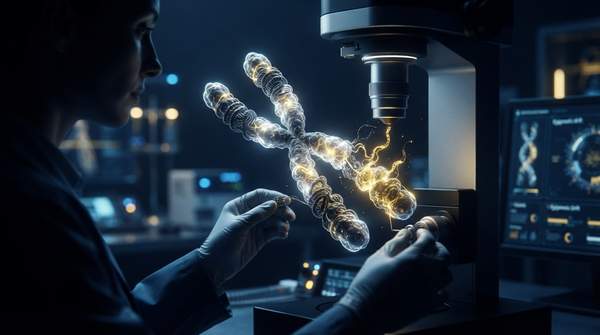
How Epigenetic Changes Drive Aging and Why They Might Be Reversible
Aging is driven by epigenetic changes, reversible modifications that control gene activity without altering DNA. These molecular switches can drift over time, leading to cellular decline, but their reversibility offers promising avenues for interventions to slow or reverse age-related damage.

Distinct Neuronal Subtypes in Premotor Cortex Drive Precise Motor Timing Adjustments, MPFI Finds
New research from MPFI identifies specific neural mechanisms in the premotor cortex responsible for adjusting learned motor action timing. The study reveals that synaptic plasticity within distinct excitatory neuron subtypes is crucial for precise and complementary adjustments to motor timing.

ZFNs, TALENs, or Base Editing: A Researcher's Guide to Choosing the Right Gene Editor
Researchers must choose the right gene editing tool from options like ZFNs, TALENs, and Base Editing based on specific experimental needs. Understanding their distinct mechanisms, precision, and applications is crucial for successful genome engineering and therapeutic development.

How Vitasunn Nutritionals Helps Address Joint Pain with Their Top Bone and Joints Supplements
Vitasunn Nutritionals offers a range of top bone and joint supplements to help address joint pain and stiffness, including formulas featuring glucosamine, chondroitin, collagen, calcium, and vitamin D.

Comparing Computational Methods for Drug Discovery: Docking, Molecular Dynamics, and Machine Learning
This article compares molecular docking, molecular dynamics simulations, and machine learning models for drug discovery, detailing their principles, strengths, limitations, and synergistic integration for enhanced predictive accuracy.

Comparing Generative Adversarial Networks, Reinforcement Learning, and Graph Neural Networks for Scientific Discovery
This article compares Generative Adversarial Networks (GANs), Reinforcement Learning (RL), and Graph Neural Networks (GNNs) for scientific discovery, detailing their strengths in hypothesis generation, experimental optimization, and data analysis. It emphasizes how integrating these AI architectures, as seen in the Chemistry42 platform, can accelerate innovation in fields like molecular and materials design.